Steve Bannon Quotes
I want China to stop appropriating our technology. China is, through forced technology transfer and through stealing our technology, but really forced technology transfer, is cutting out the beating heart of American innovation.
Rose, Charlie. "Steve Bannon: The 60 Minutes Interview." CBS News, 10 Sept. 2017.

This has been true for a long time. The United States in its colonial days and its early days of independence stole huge amounts, especially from England. The Lowells stealing the technology and machines for weaving cloth from English companies is one dramatic example. Another is the fact that we did not recognize the copyright laws until the middle of the 19th century. American publishers, including Benjamin Franklin, stole most of the material they published. Thomas Jefferson was a foe of government protection of intellectual property—{605105}.


Industrial spying and trade secret thefts are very common in the South Korean business culture. Bribery of competitor’s employees is common. In the pre WWII period of Japanese control, the Japanese had a policy of keeping Korea technically backward to produce food cheaply and trade the food to Japan and buy manufactured goods from Japan—a classic colonial strategy. Japanese engineers and other technicians would go to Korea set up facilities but never share their knowledge with the Koreans. If technicians were needed, they would have to come from Japan. None the less there is a cultural blindness and Korean firms will commonly steal technology from anyone—partners or others. The South Korean Governments had looked at this with a blind eye. Many Koreans believe that because of past history the only way that they can survive on world competition is to continue to pilfer technology. However, modern South Korea has excellent technicians and scientists in almost all fields and making the cultural shift to a standard that is more consonant with the majority of the industrial democracies is the great challenge.


This principle justified the Government in allowing a local Indonesian company to manufacture anti-AIDS drugs without paying licensing rates demanded by the drug companies that held the patents. The principle is that patent rights and the desire to profit should not supersede the rights of people to continue to live because they cannot afford the drugs to keep them alive. The local manufacturers provide the drugs to the government at cost of manufacture which is a tiny proportion of the price the patent owner charges.
In the early years of our nation, there was not much intellectual property being developed in America. We were an underdeveloped nation, and we took whatever we could get regardless of laws. Alexander Hamilton for example urged obtaining industrial trade secrets and even machines by whatever means was necessary. However in the latter part of the 19th century, Nathaniel Hawthorns, Mark Twain and other creative Americans persuaded the government to join copyright conventions; we had become the victim of intellectual piracy rather than the pirates. Then we became the leading nation in advocating and enforcing intellectual property rights. This coincided with our becomng the leading producer of intellectual property. Intellectual property rights has always been an issue of “whose ox was gored.” The US position is somewhat hypocritical given our early history. However, respect for intellectual property rights, we now argue, in our modern global economy will encourage businesses to not only invest in developing countries but allow their technology and trade secrets to be used in the developing nation.

Note that the only reason given in the constitution for protecting intellectual property was to promote the progress of science and useful arts. Inventors, would keep secret their inventions and techniques of manufacture and use in order to protect their economic interests. No one else would be able to benefit by understanding the invention and taking it further and increasing knowledge and understanding. So the Founding Fathers told Congress to establish a system where inventors would get a guarantee of a reasonable time to profit exclusively from the invention in exchange for making the invention public. The plans, methods and drawings had to be made public and until the 20th century a model of an invention had to be supplied to the Patent Office. Anyone could get an inexpensive copy of any patent and come and study the models. Today, most people believe that the reason for a patent system is to protect the intellectual property of the inventor, but that was not a purpose or even a serious consideration. The reason however was educational and to demystify technology and produce more science and technology which it did.

At first, there is an advantage to not recognizing copyright and allowing stealing from foreign publishers, but soon the point is reached where the practice precludes the country from developing its own writers and journalists. The same will likely be true for China and other nations where international copyright is not recognized or not enforced.


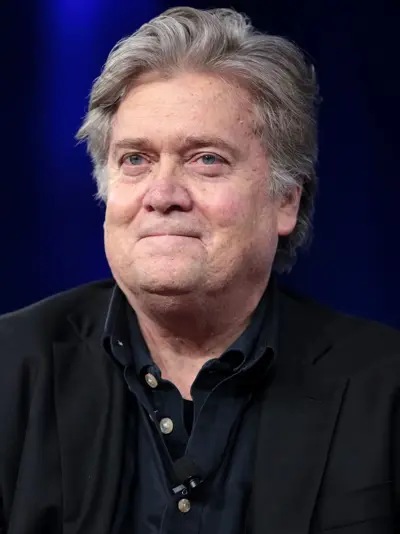
Stephen Kevin "Steve" Bannon is an American political activist and businessman who is currently serving as the Assistant to the President and Chief Strategist in the Donald Trump administration. In this capacity, since January 28, 2017, he has been a regular attendee to the Principals Committee of the National Security Council.
