Irvine Welsh Quotes
I think that in the future, as more and more money and wealth goes to the 1 per cent, it's going to polarize into the people who are for and anti-freedom. It's not that they'll have a left and a right wing thing, it's going to be a freedom and anti-freedom polarization, I think.
Welsh, Irvine. Interview. Vice, Vice Media, 2015.


After Roosevelt, most eras of American politics more or less followed the pattern Roosevelt described herein as a “calamity”, with the anger becoming more or less intense. Jefferson thought that these were natural divisions of politics in all societies--{604810}. The thing that masked this for years was race and slavery. In Lincoln’s time there were liberals and conservatives in both parties if race were ignored. In Theodore Roosevelt’s era, he, Taft and others were generally liberal reformers, while a large number of Republicans were conservative supporters of the status quo. Some democrats were radical reformers like William Jennings Bryan while others were arch conservatives. Until 1964 and the Civil Rights Act there were many conservatives in the Democratic Party, but almost all switched to the Republican Party in anger. The Republican conservatives tended to drive the Republican liberals out of the party and for the last part of the 20th century Roosevelt’s “calamity” well described the American political scene, and the anger increased carrying partisan bitterness into the 21st century.


This was his most famous speech.


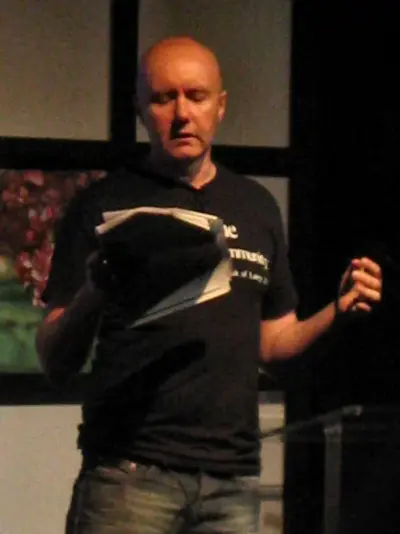
Irvine Welsh is a Scottish novelist, playwright and short story writer. His 1993 novel Trainspotting was made into a film of the same name. His work is characterised by a raw Scots dialect and brutal depiction of Edinburgh life. He has also written plays and screenplays, and directed several short films.
