Hillary Clinton Quotes
I think that for most of our history, there was a nuanced reading of the Second Amendment until the decision by the late Justice [Antoine] Scalia and there was no argument until then that localities and states and the federal government had a right, as we do with every amendment, to impose reasonable regulation.
Clinton, Hillary. Private Fundraiser Event in New York. The Washington Free Beacon, 2016.


Like many other ideologues, the Senator was a better politician than he was a historian. He had a tendency to not be very accurate in his facts. In this particular gaff, which was castigated by critics, he was wrong about both facts he gave. First, not only was it not the case that there were few gun crimes “back then”. See {640086} and {640085} . Second his implication that everyone carried guns, and the guns were responsible for the “low” gun crime rate, was also false. Gun crime was so prevalent that most towns and cities in the West had gun control ordinances prohibiting carrying guns in the city limits. The famous Gunfight at the OK Corral which the Senator cited was in Tombstone, AZ in 1881. At that time, it was illegal to carry a gun in Tombstone. See {640063} for the gun control ordinance. As a matter of fact, the OK Corral gunfight was fought because Sheriff Wyatt Earp was disarming some cowboys who brought their guns to town. Glen Kessler, The Washington Post fact checker gave this quotation “3 Pinocchios”.


There are some Americans who believe that the courts should look to the original intent of the framers of the Constitution to determine the constitutionality of a law. Most jurists believe that original intent is but one factor that should influence the decision.
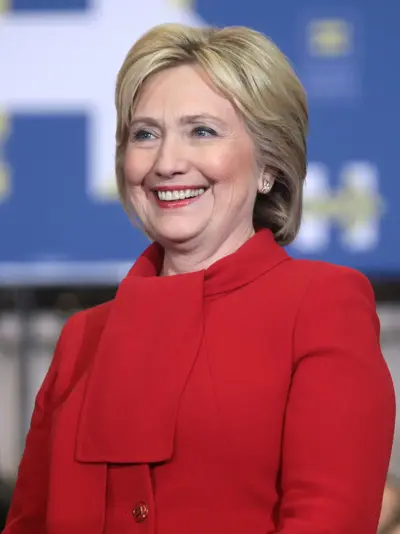
Hillary Diane Rodham Clinton is an American politician, diplomat, lawyer, writer, and public speaker who served as the 67th United States secretary of state from 2009 to 2013, as a United States senator from New York from 2001 to 2009, and as First Lady of the United States from 1993 to 2001. Clinton became the first woman to be nominated for president of the United States by a major political party when she won the Democratic Party nomination in 2016. She was the first woman to win the popular vote in an American presidential election; however, she failed to win the Electoral College.
