Paul Wolfowitz Quotes
I think one has to say it's not just simply a matter of capturing people and holding them accountable, but removing the sanctuaries, removing the support systems, ending states who sponsor terrorism. And that's why it has to be a broad and sustained campaign.
Wolfowitz, Paul. "DoD News Briefing." U.S. Department of Defense, 13 Sept. 2001.

He and the government had just given the OK for a targeted assassination of the Palestinian terrorist who had designed the bombs and recruited the suicide bombers which led to the deaths of over 100 Israelis. Shortly thereafter, a cell phone the engineer was using blew up killing him by the same method whereby he had killed so many. This was the first targeted assassination of terrorist leaders, which then became an operational policy.

Although the President was personally opposed to terrorism and his policies opposed terrorism, in his country most people supported terrorism and the Islamic schools—madrasas—taught intolerance, hate and terrorism. Even leading generals of the army were major supporters of terrorism. See {586700} as an example.


This is diplomatic language for a very stern warning. Pakistan supported terrorist organizations because 1) they used the terrorists as their proxies in their continuing conflict with India. The terrorists were a de facto asset of the Pakistani Intelligence Service. 2) Many Pakistani citizens were ultra-orthodox Muslims and believed in the religious objectives of the terrorists and even shared a religious belief in the propriety of the terrorist methods as long as they were being applied to non-Muslims or Muslim heretics. 3) Much of the militant infrastructure was in the tribal, frontier areas of the country where the government was relatively weak. 4) The militants had taken the position that if the Pakistan government tried to curtail their jihad efforts, then the government and its supports were heretical Muslims and were, under Sharia—Islamic Law—proper targets for their terrorism activities. The number of Pakistani Muslims that the terrorists murdered was far greater ironically than the American or European Christians and Indian Hindus that had been killed. A decade later, the Pakistani authorities were split over those who realized that the terrorists were most dangerous to the Pakistanis themselves—and especially the government officials—and those who believed that the terrorists should have continued support because of the 4 reasons above.
Azad Kashmir is that part of the disputed territory of Kashmir that was under Pakistan’s control, as opposed to the part of Kashmir that was under Indian Control.


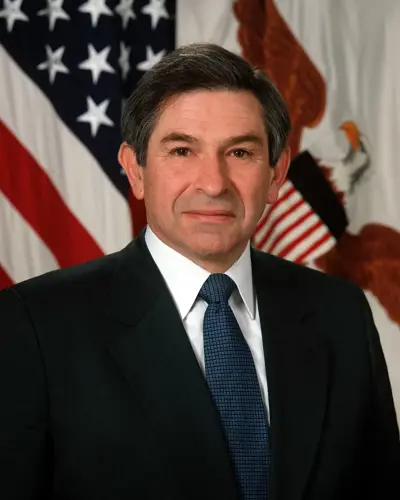
Paul Dundes Wolfowitz is an American political scientist and diplomat who served as the 10th President of the World Bank, U.S. Deputy Secretary of Defense, U.S. Ambassador to Indonesia, and former dean of Johns Hopkins SAIS. He is currently a visiting scholar at the American Enterprise Institute.
