Howard Dean Quotes
I think most people... would be glad to pay the same taxes they paid when Bill Clinton was president, if only they could have the same economy they had when Bill Clinton was president.
Dean, Howard. You Have the Power: How to Take Back Our Country and Restore Democracy in America. Simon & Schuster, 2004.

The traditional conservative tax principle has always been that low tax rates are needed to produce economic expansion and in general this had been so until Clinton and Rubin combined higher tax rates with great fiscal discipline of government spending and low interest rates, not only produced a great economic expansion but eliminated the Reagan deficit and left office with a huge projected surplus.


Kennedy, with great Republican support proposed a reduction of the top income tax rate from 91% to 65%, reduction of the bottom rate from 20% to 14%, and a reduction in the corporate tax rate from 52% to 47%. That put the tax rates at the appropriate level. Economic growth was reasonable until President Reagan’s military spending cold war strategy produced huge deficits, Clinton raised the tax rates slightly and had the best economic growth ever, and had a balanced budget. George W. Bush lowered taxes had much slower growth and even larger deficits. However, by 2013 all hints of bipartisanship were gone. The Republicans claimed that the then tax rates were much too high—the highest income tax was half the rate that most agreed in 1962 was the right rate. And the corporate tax was 35 %, far lower than the Kennedy rate of 47% and incredibly lower when we consider that with deductions that were then in force the average corporate tax was only 12% the lowest since the Great Depression. Meanwhile the 2008 Bush Economic Meltdown and the Great Recession it produced the highest deficits in history with the lowest taxes in modern times and much of the polarized population demanding further tax cuts and an equal number demanding increased tax revenue.


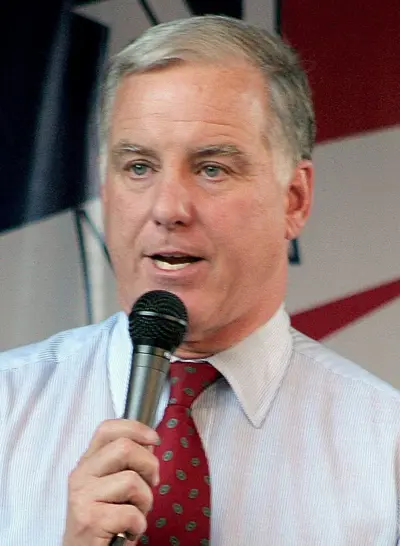
Howard Brush Dean III is an American physician, author, lobbyist, and retired politician who served as Governor of Vermont from 1991 to 2003 and Chair of the Democratic National Committee (DNC) from 2005 to 2009. Dean was a candidate for the Democratic nomination in the 2004 presidential election. His implementation of the fifty-state strategy as head of the DNC is credited with the Democratic victories in the 2006 and 2008 elections. Afterward, he became a political commentator and consultant to McKenna Long & Aldridge, a law and lobbying firm.
