Sylvia Plath Quotes
I saw the first of the 7-mile-long column appear - red and orange and green banners, 'Ban the Bomb!' etc., shining and swaying slowly. Absolute silence. I found myself weeping to see the tan, dusty marchers, knapsacks on their backs - Quakers and Catholics, Africans and whites, Algerians and French - 40 percent were London housewives.
Plath, Sylvia. Letters Home: Correspondence 1950-1963. Edited by Aurelia Schober Plath, Harper & Row, 1975.


The communists in America opposed war and thus stood with the conservatives on this point. However, when Hitler attacked Russia, the Communists changed their position and supported American entry into the war. The America First type conservatives were enamored of Fascism, Hitler and Mussolini and some continued to oppose the war, even after we were attacked at Pearl Harbor and Hitler had declared war on the United States.

There was a Sedition law which made it a Federal felony to encourage anyone not to join or support the military during the First World War. The Socialist Politician and Candidate for President, Eugene Debbs and others, were jailed for less seditious statements. Helen Keller was a remarkable woman who was blind and deaf, and yet she became a great orator and social reformer. The administration died not relish the reaction if they put this popular, blind, deaf woman in jail so she was never charged. The law of course was unconstitutional, but it took years to reach that determination. Until then, the Sedition Act was one of the worst examples of infringement in American history since the original Alien and Sedition Acts of John Adams.


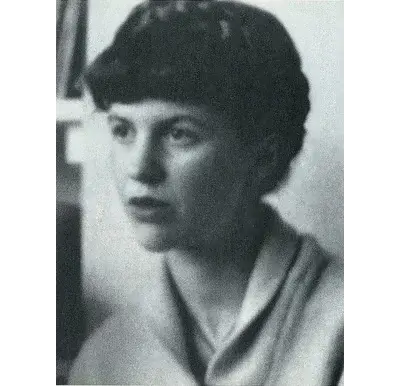
Sylvia Plath was an American poet, novelist, and short-story writer. She is credited with advancing the genre of confessional poetry and is best known for two of her published collections, The Colossus and Other Poems (1960) and Ariel (1965), as well as The Bell Jar, a semi-autobiographical novel published shortly before her death in 1963. The Collected Poems were published in 1981, which included many previously unpublished works. For this collection Plath was awarded a Pulitzer Prize in Poetry in 1982, making her the fourth to receive this honour posthumously.
