Chongzhen Quotes
I, poor in virtue and of contemptible personality, have incurred the wrath of God on high. My Ministers have deceived me. I am ashamed to meet my ancestors; and therefore I myself take off my crown, and with my hair covering my face, await dismemberment at the hands of the rebels. Do not hurt a single one of my people!
The Emperor hung himself rather than fall into the hands of the rebel Li Tzu-ch`eng. This ended the Ming Dynasty
Chongzhen, 1610-1644, [Zhu Youjian], Last Ming Emperor, Abdication Statement c. 1640
Sourced by: Eigen's Political and Historical Quotations

The Senator had been illegally frequenting prostitutes and was a regular customer of an infamous DC Madam. The reason this quotation is noteworthy is that it is a stunning example of moral hypocrisy in politics. Vitter ran as a very conservative politician who placed traditional Christian and family values at the forefront of his political philosophy. When his behavior was made public there were calls for his resignation. He refused and instead gave this statement. However, he had been elected to replace Robert Livingston who had been the Speaker of the House but had resigned when he was caught frequenting prostitutes. Vitter’s hypocrisy was all the more hypocritical as he had demanded the resignation of President William Clinton who had engaged in adulterous sex while in office. When he was running for office and his opponent complained that Vitter had been frequenting prostitutes, Vitter said that the accusation was absolutely and completely untrue" and that it was "just crass Louisiana politics”. This reinforced the hypocrisy in that Vitter claimed that one of Clinton’s failings was that he lied about his adulterous affair, while Vitter not only lied, but did so the public for purposes of getting elected. And just a few months before this statement, Vitter proclaimed the importance of abstinence for teenagers and faithfulness for adults. See {625896}.


Other war criminals had committed suicide in conformity with the Japanese custom. But Tojo stayed alive so that he could take the responsibility from the Emperor Herohito who many Americans wanted tried for his actions and inactions during the war. But Tojo made an error. At the beginning of his trial he testified that he always obeyed the Emperor even though he was the Prime Minister and the head of government. Therefore, the Emperor was guilty of those crimes he had discussed with Tojo and the cabinet. Later, he was persuaded to change his testimony and said that he led the country to war and the Emperor wanted peace, a statement that few believed. See {587278}. While the Emperor had committed war crimes General MacArthur believed that the Emperor left in place and unpunished would make it easier to govern Japan, than if he were tried and punished. However, he and his staff fabricated a report to exonerate the Emperor rather than make his recommendation to his superiors and the President so they could either accept his view or not. He was a unilateralist in the administrative sense of the word. See {587279} for additional material on the Emperor’s guilt.


A. B. Magil. Poem written upon the suicide of the Russian Poet, Vladimir Vladimirovich Mayakovsky, 1893-1930. The fact that a Marxist Russian Poet would commit suicide was not seen as the result of a mental problem like depression, but as a political act and a statement of dissatisfaction with 1930 Russia.


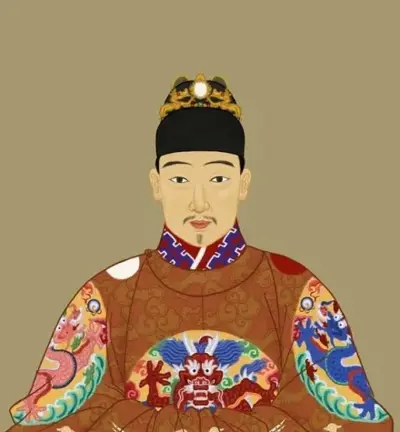
The Chongzhen Emperor, personal name Zhu Youjian (Chinese: 朱由檢; pinyin: Zhū Yóujiǎn), was the 17th and last Emperor of the Ming dynasty as well as the last Han Chinese to reign as Emperor of China. He reigned from 1627 to 1644. "Chongzhen," the era name of his reign, means "honorable and auspicious".
