Walker Evans Quotes
I never took it upon myself to change the world. And those contemporaries of mine who were going around falling for the idea that they were going to bring down the United States government and make a new world were just asses to me.
Cummings, Paul. "Oral history interview with Walker Evans." Archives of American Art, Smithsonian Institution, 13 Oct. - 23 Dec. 1971.


The veiled threat of violence and disruption was a tactic that did not work.

This is not only attributed by reliable sources but apparently Roosevelt had said this on several occasions. The word “radical” has had different shades of meaning at different periods of American History. The origin of the word from the Latin means someone who wishes to change things very rapidly and not gradually. In the time of the Civil War, the majority of the Republicans proudly referred to themselves as “radicals” or “radical Republicans” because they wanted to abolish slavery immediately. In the late 19th century the word “radical” referred to anarchists. From the Russian Revolution onward “radicals” were communists who presumably wanted to change governments throughout the work through revolution—very rapid change. However, in the early 20th century, radicals were people who wanted to reform and regulate businesses and monopolies rapidly and it is this sense he was a radical. But by style, he was a radical in most things in that he wanted to change things and change them rapidly.


"Extremists" as Flexner used the term were intellectual and philosophical extremists--at that time intellectual communists, fascists, atheists, libertarians, anarchists. In the 21st century, "extremists" tended to connote violence and terrorism. There were violent revolutionary communists, fascists and anarchists, but there were very few. Must were intellectual and philosophical advocates of the theories.


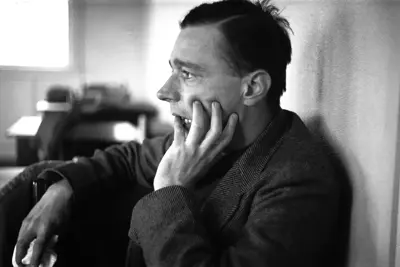
Walker Evans was an American photographer and photojournalist best known for his work for the Farm Security Administration (FSA) documenting the effects of the Great Depression. Much of Evans's work from the FSA period uses the large-format, 8×10-inch (200×250 mm) view camera. He said that his goal as a photographer was to make pictures that are "literate, authoritative, transcendent".
