Richard Brautigan Quotes
I like to think / it has to be!) / of a cybernetic ecology / where we are free of our labors / and joined back to nature, / returned to our mammal / brothers and sisters, / and all watched over / by machines of loving grace.
Richard Brautigan, 1935-1984, Poet & Novelist, “All Watched Over By Machines Of Loving Grace”
Sourced by: Eigen's Political and Historical Quotations


In the1969 mission to the moon, the lunar module control computer flashed a Program Alarm warning message, and the Mission Control officer Steve Bates, with less than 30 seconds to go, had to make a decision whether to abort the module landing or continue. He spoke to Garman, who concluded that since the message did not repeat, that the message was most likely a spurious message—a false alarm. German told him to go ahead when most others wanted to abort. As Garman was the most familiar staff member with the software, Bates followed his lead and continued the landing. Garman was right and he became known as “The Man who saved the Moon Landing”.


First use of the term robot to indicate an artificial human.


He was one of the team that created the first Atomic Bomb. In 1946, the atomic bomb was known about by almost all Americans and almost no one had even heard of a computer or the concept of a computer. The British and Americans during the war had collaborated to build very limited electronic calculating machines but the concept of programs to control the calculating machines was new—initially created by van Neumann and Englishman Alan Turing. When he made this statement most people thought it was the ravings of a “mad scientist. He was one of the team that later developed the first real computer at the Institute for Advanced Study at Princeton.”

His 50 year prediction was a little too optimistic although a large percentage of the routine, and some non-routine, jobs had become automated especially in the automobile and other manufacturing arenas, and many other fields. But there were still some other jobs that were still being done without machines in 2014. Asimov was essentially right but a little early in his timing.

Musk was one of the very few technilogical leaders who had great fear about the potential danger of artifical intelligence and thought that it should be regulated.


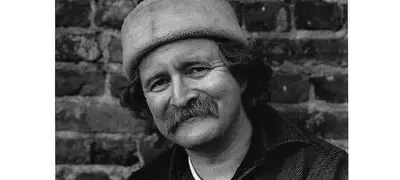
Richard Gary Brautigan was an American novelist, poet, and short story writer. His work often clinically and surrealistically employs black comedy, parody, and satire, with emotionally blunt prose describing pastoral American life intertwining with technological progress. He is best known for his novels Trout Fishing in America (1967) and In Watermelon Sugar (1968).
