Barbara Ehrenreich Quotes
I haven't seen much socially redeeming about religion. I'm an atheist. I don't here want to get into the Hitchens- or Dawkins-style attack on religion. I was raised on that. It's boring.
Ehrenreich, Barbara. "Barbara Ehrenreich: 'I'm strongly tempted to get biblical'." Interview by Scott Timberg. Salon, 20 Apr. 2014.


In an interview with a Norwegian magazine, the Eco stated that he had based his novel, “Foucault’s Pendulum”, on Chesterton’s epigram: “When men stop believing in God, they don’t believe in nothing, they believe in anything.” See related quote.


Einstein’s religious views were very sophisticated and unusual. He was a deist—a believer in God. He was of Jewish background and like some Protestant sects, Jews can interpret scripture and the nature of God as individuals. They need not follow a particular doctrine. However Einstein had a very complex vision of God—as he described it, the “God of Spinoza”—a 17th century Rabbi and Philosopher whose views were so radical that his books were banned and he was excommunicated by the Rabbis of Holland, a rarity in Judaism. This view of God is not the human-related form but a view of God as an abstraction everpresent and a prime mover inherent in nature, the world and in humanity.


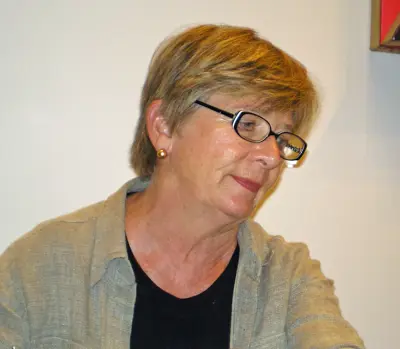
Barbara Ehrenreich is an American author and political activist who describes herself as "a myth buster by trade" and has been called "a veteran muckraker" by The New Yorker. During the 1980s and early 1990s she was a prominent figure in the Democratic Socialists of America. She is a widely read and award-winning columnist and essayist, and author of 21 books. Ehrenreich is perhaps best known for her 2001 book Nickel and Dimed: On (Not) Getting By in America. A memoir of Ehrenreich's three-month experiment surviving on minimum wage as a waitress, hotel maid, house cleaner, nursing-home aide, and Wal-Mart clerk, it was described by Newsweek magazine as "jarring" and "full of riveting grit," and by The New Yorker as an "exposé" putting "human flesh on the bones of such abstractions as 'living wage' and 'affordable housing'." She is a recipient of a Lannan Literary Award.
