Al-Mu'tamid ibn Abbad Quotes
I have no desire to be branded by my descendants as the man who delivered al-Andalus as prey to the infidels. I am loath to have my name cursed in every Muslim pulpit. And, for my part, I would rather be a camel-driver in Africa than a swineherd in Castile
Al-Mu'tamid ibn Abbad, 1040-1095, Islamic Poet & Abbadid Dynasty King of Seville, Spain, Dulcie Lawrence Smith, The Poems of Mu'tamid, King of Seville
Sourced by: Eigen's Political and Historical Quotations


One Islamic belief that has stood since the inception of the religion is that if a true believer who is defending the faith in a jihad is killed, he will immediate be transported to Paradise where he will receive the best of the other world. If a Muslim dies under normal circumstances, he is judged and may or may not attain Paradise depending on his past life. However, if he dies in jihad, all past sins are immediately erased and he is guaranteed Paradise. This quotation is exactly what is told to Muslim fighters and suicide bombers today (see {635766}, {588728} and {590762}) and it is just as effective as ever in persuading men to fight and sacrifice themselves. The Roman Catholic Pope issued a similar edict in the Crusades and fights of both religions were willing and almost anxious to die in battle. In modern times Christian leaders do not make such appeals and if they did, few would believe them.

He was referring to Joseph ibn Naghrela, the son of Samuel ibn Naghrela ({623786} & {623774}) The father had been the vizier the King and the son was appointed Secretary to the Muslim King. He was one of the Muslims who were jealous that Jews should have influential positions in a Muslim society.

Most people are familiar with the people are familiar with the terrible persecution of the Jews in Spain by the Christians. Although there were a few examples of tolerance to Jews by Muslims when they controlled Spain and instances like modern Turkey. Generally however there is and has been Islamic persecution of Jews, Christians, and other non Muslims in almost all nations where Muslims have been in control. Until the Enlightenment, Christian persecution of other religions was just as bad if not worse.
At the time, most Muslims and Jews of Andalusia lived together very amicably. Ibn Hazm was a brilliant scholar of philosophy, law, theology, and science and the leading Islamic intellectual of Andalusia. However, he had one major rival, a Jew named Samuel ibn Naghrela who was just as brilliant a scholar, but also one of the best military leaders, and physicians of the kingdom. (See {623786} & {623774}) Ibn Hazm was very jealous and tried to turn the Muslim Berber King Habbus al-Muzaffar against ibn Naghrela and other Jews. The king however made Samuel ibn Naghrela his hajib (prime minister / vizier) of Grenada in 1037. He was also made military commander and excelled at both areas while continuing his scholarly activity. Samuel ibn Naghrela held his political and military positions for 17 years and both these intellectuals wrote brilliant books in several field which added to the reputation of this era as the Golden Age of Islamic Spain.

With so many revolutionary rulers of new nations suppressing all opposition, the history of Ataturk and Turkey is unique. Ataturk was so popular and his People’s Party so successful that there was no opposition and Turkey had one party rule. However, Ataturk was determined to have Turkey become a parliamentary democracy as good as the Western nations of Europe. So a tradition of multi-party democracy was needed. So Ataturk actually went to his friend Fethi Okyar and asked him to start an opposition party and oppose the government. Fethi was a strong supporter of the revolution and generally was in concurrence with Ataturk and the People’s Party on everything. Ataturk however convinced him that they had to start a tradition that would take Turkey through the future, and he did create a new party-- Serbest Cumhuriyet Fırkası (Liberal Republican Party) and worked hard to find differences with the People’s Party and the Government. One immediate contribution was the oversight that the new party provided—a strong tradition that exists to this day in Turkey.


The judgment of future generations is usually quite different from that of the contemporary generation.


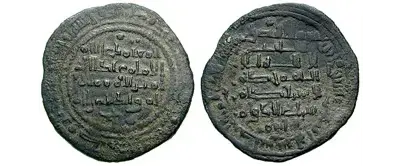
al-Mu'tamid Muhammad ibn Abbad Ibn Ismail al-Lakhmi, lived 1040–1095, was the third and last ruler of the taifa of Seville in Al-Andalus. He was a member of the Abbadid dynasty.
