Malala Yousafzai Quotes
I had a terrible dream yesterday with military helicopters and the Taliban. I have had such dreams since the launch of the military operation in Swat. My mother made me breakfast and I went off to school. I was afraid going to school because the Taliban had issued an edict banning all girls from attending schools.
Yousafzai, Malala. "Diary of a Pakistani schoolgirl." BBC News, 19 Jan. 2009.

He was retired when he appeared. It was shortly after the September 11 attack and the Taliban Government of Afghanistan was giving sanctuary to Al Qaida and bin Laden. The President had given them an ultimatum to turn them over.


The Pakistani Intelligence Service and the Pakistan Army were never under the control of the civilian government which wanted an alliance with the United States in the War on Terror. However, the Pakistani military and especially their intelligence service (ISI) wanted the support of Al Qaeda and the Muslim religious extremists in Pakistan in their endless crusade against India. The Afghanistan Taliban could not sustain their attacks if they were not given sanctuary, weapons, and supplies over the border in Pakistan, This was arranged and given the go ahead by the ISI. Holbrooke, with American responsibility for BOTH Afghanistan and Pakistan speculated that the war in Afghanistan would end if we attacked the Pakistani ISI and blocked their supply and sanctuary activities, hence the quotation. “The Wrong Enemy” was taken from this quote by Carlotta Gall in her book in the role of Pakistan in the Afghanistan War.

The Taliban terrorists would try and kill, kidnap and hold people for ransom following a Muslim tradition dating back to the Barbary Pirates. While there is always pressure to negotiate to alleviate the immediate situation, the negotiation is in and of itself, a reward for the terrorism. Hence the general’s rigid view.


The military attack on the Taliban was a great success and the regime was ousted very rapidly. Once the regime was displaced, however, the military was faced with an extremely decentralized country with sporadic resistance from Taliban sympathizers and with the tough task of rebuilding the dilapidated country.

The Pakistani Government at the time and for most of the history of that nation did not have much control over the military, and regardless of what agreements the civilian government might have made, the military did not wanted to curry favor with as many Islamic radical terrorist groups as possible even though they even killed Muslims of Pakistan. They would not send the military into Northern Pakistan (Waziristan) to eliminate the Taliban sanctuaries or offend their tribal "hosts" as they were so paranoid about India that they wanted the terrorists as allies.


The Taliban opposed all education except orthodox Muslim religious education.

The initial great military success in Afghanistan was in great part the result of the military focus of the mission. Later there were other objectives added as a part of nation building and these proved very difficult—especially the elimination of corruption.


The Security Counsel was meeting it the Situation room at the White House

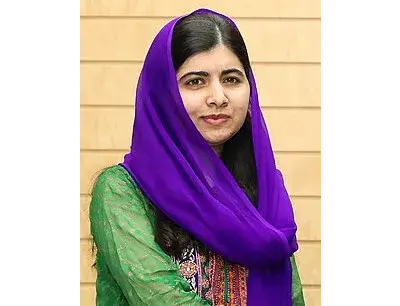
Malala Yousafzai, often referred to mononymously as Malala, is a Pakistani activist for female education and the youngest Nobel Prize laureate. She is known for human rights advocacy, especially the education of women and children in her native Swat Valley in Khyber Pakhtunkhwa, northwest Pakistan, where the local Pakistani Taliban had at times banned girls from attending school. Her advocacy has grown into an international movement, and according to former Pakistani Prime Minister Shahid Khaqan Abbasi, she has become "the most prominent citizen" of the country.
