Paul Polman Quotes
I grew up in a small town in the Netherlands which, for years, had been a center of textile production.
Polman, Paul. Interview by Simon Goodley. "Paul Polman: 'I don't have a problem crying'." The Guardian, Guardian News & Media, 22 Jan. 2010.

Fortunately for America, Jefferson did not get his wish. Jefferson did mellow on this point as he got older. See {606440} for a related quotation 27 years later.


Ford, an inveterate racist and anti-Semitic in his old age was very liberal when he first started and accomplished so much. He not only hired foreigners, but also some men of his initial workforce were handicapped. He was proud of the fact that jobs could be created on his concept of an assembly line that was so specialized that handicapped people could be productive workers as they did not have to do everything in the manufacturing process. Since the assembly line did the moving, men who had trouble walking could sit and be very productive at some tasks. Further, Ford did not try and pay his assembly line workers less than the going wage because their skills could be much narrower. He actually doubled the salaries (see {642361}) and picked men who were not wed to the older, traditional way of manufacturing things. The productivity came from the engineering of the cars and the assembly line, not be cutting wages, a practice that he did not continue as he grew older and tried to make his money the traditional way of exploiting the workers more. When the other auto companies had recognized the union, the elder Ford would not.


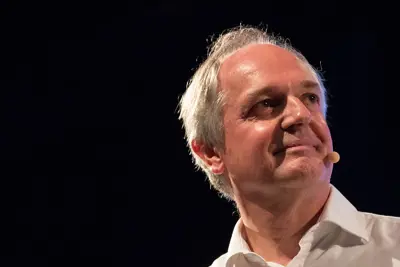
Paulus Gerardus Josephus Maria Polman is a Dutch businessman. He is a former Procter & Gamble president for Western Europe. In 2006 Polman joined Nestlé as chief financial officer and became vice president for the Americas in February 2008. From 2009 to 2019, he was the chief executive officer (CEO) of the British-Dutch consumer goods company Unilever. In 2019, he created a new organization called Imagine, along with co-founders Valerie Keller and Jeff Seabright, to help businesses "eradicate poverty and inequality and stem runaway climate change."
