Edward Snowden Quotes
I don't think it's going to be related to social or economic policies; it's going to be the fact that [Barack Obama] said let's go forward, not backward, in regard to the violations of law that occurred under the Bush administration.
Snowden, Edward. "Edward Snowden: A 'Nation' Interview." Interview by Katrina vanden Heuvel and Stephen F. Cohen, The Nation, 28 Oct. 2014.


Senator Church was the chairman of the committee. It’s reports (14 in all) are the most extensive documentation of U. S. intelligence ever compiled.


Actually a few minor characters were prosecuted for financial crimes committed during that period but none were prosecuted whose behavior caused or accelerated the meltdown, and no bank officers were prosecuted despite the FBI reporting that hundreds of thousands of Mortgage Foreclosure involved perjury by bank officers in a pattern that was used by most of the large major banks. The Obama administration was in the dilemma of either choosing one or two bank officers of whom to make an example or if all those who had committed serious crimes were prosecutors, it would involve thousands of the officers of almost every major bank and tens of thousands of officials and mortgage related firms. These were among the wealthiest and most influential people in the country, and there would be few left to build the American Banking System back up when that was one of our most important national priorities. They were also amongst the largest political contributors to both political parties. So the government bailed the bankers out financially, allowed them to maintain million dollar of more salaries and bonuses, and gave the entire batch of people who broke the law a de facto immunity from criminal prosecution. A further complicating factor was that many of the most egregious, greedy, and publicly harmful were not illegal as a result of much change in the law as a part of financial deregulation or were new schemes that the financial industry had successfully lobbied to prevent regulation as with Derivatives.


He was Defense Minister at the time. This theme was picked up later by both Israel and the United States and after September 11, President George W. Bush made it official U. S. policy.

He was explaining his reasons for resigning in 2005 from the number two position in the Justice Department. The George W. Bush administration had implemented a program of secret wiretapping and surveillance of American citizens in America which required the authorization of the Justice Department which had determined that the program as it was being implemented violated the law. The Attorney General was ill in the hospital but had told Comey that he would not sign the authorization. The White House then pressured Comey to sign and he refused, and in a similar replay of the Watergate “Saturday Night Massacre”, the number three man at Justice would have been ordered to sign. His resignation convinced President Bush to alter the program to take account of the Justice Department objections.
At the time, the public was learning much about the behavior of police officers in terms of police brutality, irresponsible use of lethal force, racism with a spate of unarmed black males shot dead by police officers across the country. There were national calls for reform—better training, change of police culture, more accountability, body and video cameras, college education required for police officers, and civilian review boards. This particular policy union took the position that these were just a few bad apples that should be dealt with but there was no need for reform of the police profession in general they claimed, Other police unions, and just about every other component of society was demanding reform. Despite objections from the largest single police union, reforms were made, but they slowed done the process in many common cities.

Remarks before the Joint Defense Appeal of the American Jewish Committee and the Anti-Defamation League of the B’nai B’rith.


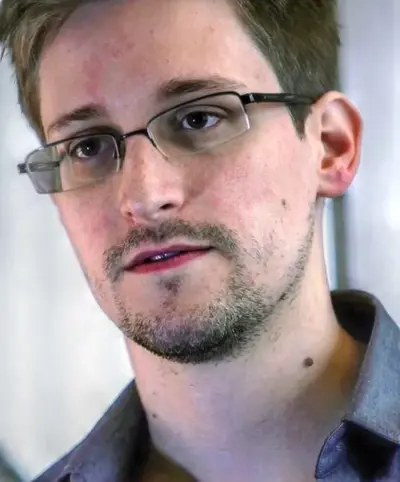
Edward Joseph Snowden is a former computer intelligence consultant who copied and leaked highly classified information from the National Security Agency (NSA) in 2013 when he was a Central Intelligence Agency (CIA) employee and subcontractor. His disclosures revealed numerous global surveillance programs, many run by the NSA and the Five Eyes Intelligence Alliance with the cooperation of telecommunication companies and European governments, and prompted a cultural discussion about national security and individual privacy.
