Malcolm X Quotes
I don't even call it violence when it's in self defense; I call it intelligence.
X, Malcolm. Malcolm X Speaks: Selected Speeches and Statements. Edited by George Breitman, Grove Press, 1965.


This appears to be the first American utterance of a longstanding doctrine of foreign policy.

He was threatening to shoot another Texas State Legislator, Ramon Romero, with whom he had been brawling on the floor of the Texas House of Represenatives. Rinaldi had claimed that all the Hispanics who were protesting the bill he was supporting were Illegals and called ICE. Romero objected to the Racial Profiling and generalization of many Hispanic Citizens whose ancestors were Texas Citizens when Texas became a Republic.


Malcolm was not an enthusiast of non violent, passive resistance a la Martin Luther King. He did not generally advocate general violence per se, but did preach the doctrine of the 21st century National Rifle Association: That everyone should be armed and use the weapons to thwart criminal attacks on them and their families. However at the time, many police departments commonly broke the law and attacked Blacks in many ways. If Malcolm had more followers there could easily have been armed pitched battles between blacks who had been attacked and police who even if their colleagues had violated the law, would not allow citizen armed defense. The non-violence of King and others, accomplished the objective with relatively few people killed and wounded. They were virtually all Black or white sympathizers however. The racists bore no physical casualties but their culture and way of life was destroyed.

The United States was a new, militarily weak country. Many of its leaders believed that even if our interests were attacked or some citizens abused, it was not worth the United States going to war unless the attack were existential—threatened the very existence of the country. The split was clear during the War of 1812 where in general, New England was opposed to war with Britain, the Atlantic states were not firm on either side, and the South and West (Kentucky was then the West) were the war hawks. Mrs. Madison was a hawk—an unusual expression for a woman and her role as First Lady did not inhibit her from her own independent political opinions. On the War of 1812, Mr. Madison was in favor of war, but was not so unequovical and positive as his wife was.


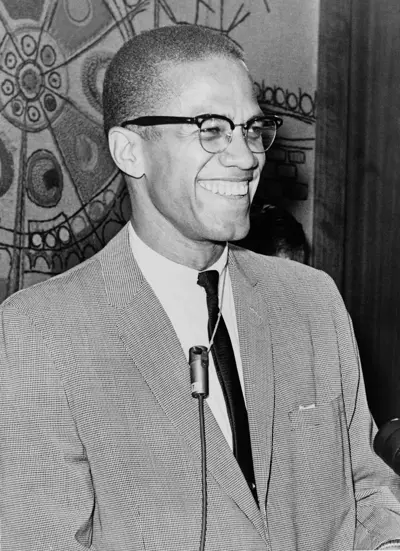
Malcolm X was an African-American Muslim minister and human rights activist who was a popular figure during the civil rights movement. He is best known for his time spent as a vocal spokesman for the Nation of Islam.
