Gerrit Smith Quotes
I do not object to the construction of rail roads and canals.
Smith, Gerrit. Speeches of Gerrit Smith in Congress. Mason Brothers, 1855.


At the time, roads were built by the states. This was one of the first instances urging that the Federal Government take some responsibility for roads. This would culminate when President Eisenhower proposed and created the National Highway System and as Madison predicted, it would have a massive economic benefit for the nation.
Although Madison vetoed the Federal bill to improve the national infrastructure, he was very much for the improvements and he said so in this veto message. He, however, did not see the Constitutional authority for the Federal government to appropriate moneys to be spent in the States for infrastructure improvement. He was for a Constitutional Amendment to do so or to make the improvements using State money as New York did building the Erie Canal. Alexander Hamilton, and many of the Congressmen who voted for the bill disagreed (many of whom were also in the Constitutional Convention) and did not see the Constitutional limitation that Madison did. See Hamilton’s Quote 644278. He was particularly concerned that small and less affluent states could not possibly have the skill to design these or the finances to build them. Later President’s and Congresses sided with Hamilton. It would be hard to envision America today of Madison’s view had prevailed.


It was on time and on budget. It is hard to imagine that we could complete a project this large today. It would take more than 8 years to do the studies and get the permits and fight off the lawsuits. However, the engineering feat for the up and coming young country was as Clinton said, “unparalleled in the experience of mankind.” America had already exceeded the Ancient Egyptians, the Europeans, the Chinese. The economic development for the young nation was enormous—as big as the digital revolution almost two centuries later.


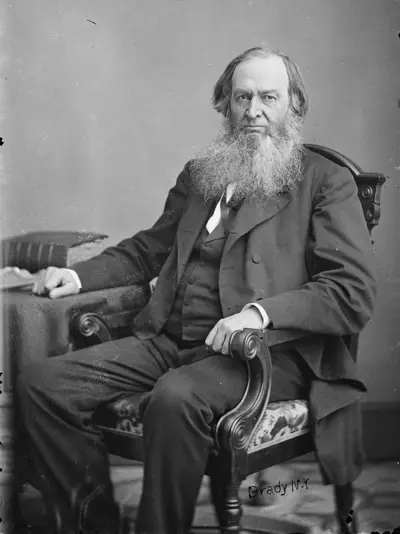
Gerrit Smith, also spelled Gerritt, was a leading American social reformer, abolitionist, politician, and philanthropist. Spouse to Ann Carroll Fitzhugh, Smith was a candidate for President of the United States in 1848, 1856, and 1860, but only served 18 months in the federal government—in Congress as a Free Soil Party Representative, in 1853–4.
