Sarah Moore Grimke Quotes
I do deeply deplore, of the sake of the cause, the prevalent notion, that the clergy must be had, either by persuasion or by bribery. They will not need persuasion or bribery, if their hearts are with us; if they are not, we are better without them. It is idle to suppose that the kingdom of heaven cannot come on earth, without their cooperation.
The “cause” was two-fold: abolition of slavery and establishment of women’s rights, especially suffrage. Some abolitionists and feminists thought it essential to win the support of clergymen.
Sarah Moore Grimke, 1792-1873, Abolitionist & Feminist, Letter, October 20, 1837
Sourced by: Eigen's Political and Historical Quotations


The Islamic Holy Book even recommends against friendships with Christians and Jews. See {584381}.

In 1858 the Catholic Church virtually controlled much of the Mexican state, owned much of the land, and was opposed to all notions of separation of church and state. At that time in the “War of Reform” vast changes began abolishing ecclesiastical courts, barring church land ownership, and eventually prohibiting churches from running schools and clerics from criticizing the government.

Husayn Ali Nuri. The equality of women which he proclaimed was another threat to Islam of which Bahai was a reform offshoot. Even in modern times in Iran, many Bahai are hunted down and executed.


Jorge Mario Bergoglio. Prophecy makes people face the prospect of change. As with new technology, it often brings creative destruction along with the changes.

English history has been replete with Catholic-Protestant conflict and because of the British Empire, the British historians were very familiar with the Islamic conflict with Christianity, Judaism, Hinduism, and other religions. Toynbee was very worried about the future religious struggles and he turned out to be right. Freedom isi amenable to different interpretations and compromise. Religion also has different interpretations, but many of the religious fundamentalists see compromise as an offence to God and his word. So religion is less amenable to political, civil or social structuring and compromise.

The State of Connecticut voted for disestablishment—no longer supporting an established church. There were many religious people who saw this as a calamity for religion and the churches. Lyman in retrospect had a different view. Father of Harriet Beecher Stowe and Henry Ward Beecher

In China, the religious activities of the Missionaries never really lead to the many troubles between the missionaries and the Chinese. It was their activities in the non-religious arenas articulated here by Denby.

The Bible and the Church have been the greatest stumbling blocks in the way of women’s emancipation.
The most important documents and doctrine of most churches were created by men who also established the framework of the religion. The result has in almost all cases been a sexist structure with women having not only little power not typically females are banned from all church governance. See {640303} for her quote on religion in general vis a vis women.

Franklin was a deist. He believed in God and the Creation but not the Bible which is often referred to as “revealed” truth. He did believe that classic Christianity was a positive force as some people were led to good works and a moral life by it.

Spinoza’s ideas were considered so radical and dangerous that he was the only man in history who was excommunicated by the Catholics, the Jews and the Muslims. This was his observation after his first excommunications -- by his Jewish Congregation in Amsterdam.
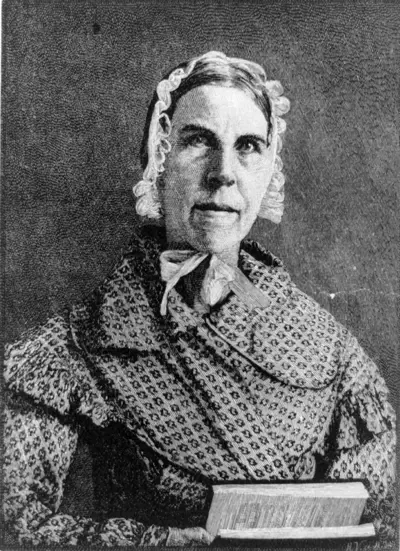
Sarah Moore Grimké was an American abolitionist, widely held to be the mother of the women's suffrage movement.:xxi Born and reared in South Carolina to a prominent, wealthy planter family, she moved to Philadelphia, Pennsylvania, in the 1820s and became a Quaker, as did her younger sister Angelina. The sisters began to speak on the abolitionist lecture circuit, joining a tradition of women who had been speaking in public on political issues since colonial days, including Susanna Wright, Hannah Griffitts, Susan B. Anthony, Elizabeth Cady Stanton, and Anna Dickinson. They recounted their knowledge of slavery firsthand, urged abolition, and also became activists for women's rights.
