Chief Joseph Quotes
I did not want my people killed. I did not want bloodshed.


Prior to whites settling in America, various Indian tribes had a long history of fierce fighting for control of Kentucky. The Transylvania Land company negotiated for the “rights” to Kentucky. Dragging Canoe, who opposed the treaty, argued that the land had a bad history and would be very difficult to settle. Poet Theodore O’Hara described Kentuckians as “Sons of the Dark and Bloody Ground” in his poem, The Bivouac of the Dead.

Shortly after, he backed off the notion of having a bloodbath removing protesting students.


Erecat was expressing his frustration with the peace negotiations and the lack of progress.


Generally after civil wars there have been extensive reprisals and trials of the winning side against the losing one. Lincoln was determined that this pattern not be followed as the bloody war was coming to an end. Ironically, Andrew Johnson, Lincoln’s successor and a Southerner, was, together with some of the Radical Republicans, in favor of trying many of the Southern leaders for treason and rebellion. Lincoln’s view however and that of the moderate members of Congress prevailed. However, the Southern Whites generally would not comply with the Constitutional Amendments and laws regarding the role of the Negro, and Johnson was very sympathetic to their racism which led to a conflict between Johnson and Congress.


The Egyptian Muslim Brotherhood had won the first democratic election, but they proceeded to use their majority to deny rights to others. Massive demonstrations against the government, with the Egyptian military support deposed the Brotherhood President and government. The Brotherhood then took to the streets, demonstrating against the ousting of their elected government. After more than a week of constant demonstrations and the blockage of many streets, the new military appointed government authorized the police to clear the streets. Some of the Brotherhood were armed and killed over 40 police and several hundred demonstrators were also killed with each side blaming the other for “starting” the violence. The vice president was a strong opponent of the Muslim Brotherhood and supported and called for the ousting of their undemocratic, albeit elected, government. However he also supported their right to protest in the streets and condemned the use of force.


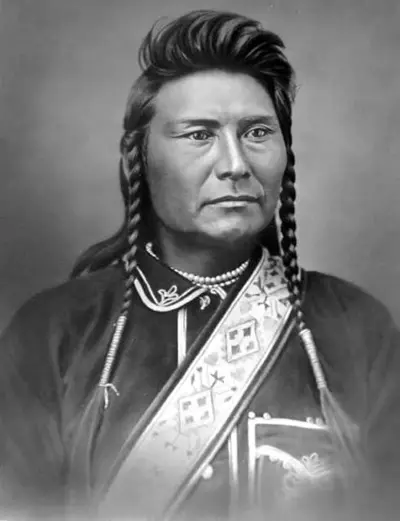
Hin-mah-too-yah-lat-kekt (or Hinmatóowyalahtq̓it in Americanist orthography), popularly known as Chief Joseph, Young Joseph, or Joseph the Younger, was a leader of the Wal-lam-wat-kain (Wallowa) band of Nez Perce, a Native American tribe of the interior Pacific Northwest region of the United States, in the latter half of the 19th century. He succeeded his father Tuekakas (Chief Joseph the Elder) in the early 1870s.
