John Pearson Quotes
I certify and declare that the Account of the Population of the District for which I am Enumerator, contained in this Book, has been truly and faithfully taken by me, and that, to the best of my knowledge and belief, the same is correct
The English census was a complete enumeration then, not a sampling.
John Pearson, 19th Century, English Census Enumerator for Lancashire, Oath he took when submitting the census book for his district, 1851
Sourced by: Eigen's Political and Historical Quotations


This view almost got him killed. It was customary to swear loyalty to the government and those that would not were perceived to be traitors. The logic was that Christians feared for their souls more so than their lives so would not swear falsely. If there was no swearing, how was loyalty to be determined?


Thomas of London. Tennyson’s quotations was not literal but the synthesis of the conflict. Beckett was the friend of King Henry and his Chancellor. Henry against Becket’s advice appointed him Archbishop of Canterbury, the head of the church in England. Soon Henry came into conflict with the Church and Thomas sided with the Church and against his old friend and king. The king had him assassinated despite their friendship.

The House was debating on the peace treaty with the United States. Pitt, then was Chancellor of the Exchequer. He knew the government would lose the vote and he would have to resign.

A Real is a a Brazilian unit of currency. The money was given illegally and might have determined the outcome of a national election. In an unusual example of party loyalty, he refused to implicate others in the party in the scandal. It is assumed that the money was used to bribe voters and/or local election officials to stuff the ballot boxes.

There was a legal requirement that all cadidates for the parliament had to sign before the election an oath swearing to take their seat if elected to close off the possibility that some would cripple the parliament by winning but not taking their seats. De Valera wanted to run, and fully intended to take his seat, but had promised to sign no oaths about the parliament elections. On the last day possible, he went to the election clerk who gave him a piece of paper with the oath printed on the top and below it, the lines for candidate signatures. De Valera took a blank piece of paper and covered the oath but leaving the signature line exposed. He then signed the line and made sure that the clerk would remember that he has not signed an oath, but had signed a blank piece of paper where the oath could not be seen. To him this was a very important distinction but if failed to convince most other Irishmen.


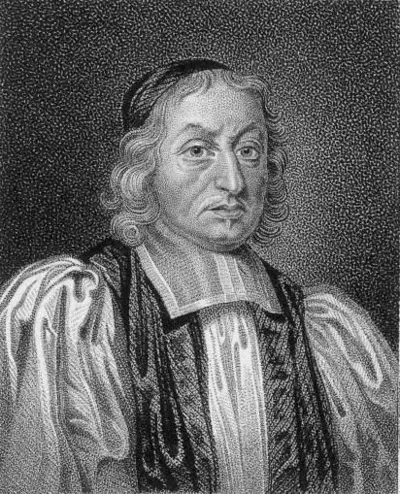
John Pearson was an English theologian and scholar.
