Marie E. J. Pitt Quotes
I cannot allow the occasion to pass without very sincerely thanking Mr. Baxter for his treatment of his subject as affecting the woman, and particularly for his able and singularly luminous expression of the instinct in the woman of any race which makes for racial purity—an instinct ... as dear ... as life itself, and ... being so, should be equally dear to the nation to which she belongs.
For Pitt and her wing, despite her liberality in other areas, racial purity was a part of nationalism, and miscegenation was “repulsive” and to be avoided by the immigration policy.
Marie E. J. Pitt, 1869-1948, Australian Poet & Feminist, Labor Party Delegate, Vice President of the Workers Political League, Debate Over the White Only Immigration Policy, 1907
Sourced by: Eigen's Political and Historical Quotations


This book was the first popular attempt to spread the eugenics concept. Is was translated into German in 1925 and unfortunately read by Adolf Hitler who sent Grant a complimentary letter. See {603544} and {602054}


Bilbo was one of the worst racists who ever served in the Congress.
Bilbo was one of the worst racists who ever served in the Congress.


There was a huge amount of racial interbreeding during the early slavery times of America. Some was consensual as people will be people, but much was the rape of Black slaves my white masters—a concept that was never considered rape by law as one cannot commit a crime against one’s own property. The result after time was every possible combination of white/black mixture. There were names for many of the combinations: Quadroons were one fourth Negro. Octaroons, one-eighth. During and after reconstruction, for purposes of discriminatory law, who was a Negro? The Louisiana “one drop rule” said that if there was ANY trace of Negro ancestry, that person was a Negro and would be discriminated against. Of course, what would happen was that many mixed race children were light skinned and looked white and many were black and all shades in between. It was relatively easy for the lighter skinned “one drop” Negroes to pass as white especially if the left the state. But if anyone accused them of being Negro, they would have been guilty of committing crimes. Some in modern times have little comprehension of how the white plantation slave owners and other whitrd could condemn their own children to a second class life of vicious discrimination, but that is exactly what they did. The great irony here lies with the modern KKK, Nazi, and other White Supremacy Groups. They still hold to the “one drip rule for their viciousness. However, under the one drop rule, almost all of them would be Negroes if they went back far enough, and ALL ARE BLACK under the one drop rule as with modern DNA and genetic analysis, we now know that every human alive today emanated from a Black woman in Africa.

This classic quotation illustrates several things. First, the degree of racism that existed in 1944 in West Virginia. Second, not how young Robert Byrd immediately leaped from the possibility of integrating our fighting forces to interracial sex. That has been typical of white racism in America—a preoccupation with race and sex. Last, Byrd who became a member of the KKK, completely changed his mind over the year and ended up supporting the things that, as a youth were worse than the demise of the nation. He matured and grew on the race issue as much of the country did and ended as a strong supporter of equality and civil rights—including affirmative action.


At the time all the Australian political parties were supporting a White Only immigration policy. Lambrick, who sometimes used the name Hypatia, started the race policy debate in the Socialist Party by this line in a Socialist Journal.

Bilbo was one of the worst racists who ever served in the Congress.

This report was submitted to President Franklin D. Roosevelt, who accepted the recommendation and signed Executive Order 9066. The Japanese on the West Coast were then rounded up and interned by DeWitt in what was one of the lowest and disgraceful points in American history. A national apology was made 34 years later. See {635792}.


In 1901 newly elected President Theodore Roosevelt invited Booker T. Washington to dine at the White House. It was the first time a Black had ever been so invited. There was a public uproar in the South. Shortly thereafter, the President and Washington were both in the audience of a Yale University event. A Supreme Court Justice took the podium. The statement brought thunders of applause.

This book was the first popular attempt to spread the eugenics concept. Is was translated into German in 1925 and unfortunately read by Adolf Hitler who sent Grant a complimentary letter. See {603544}

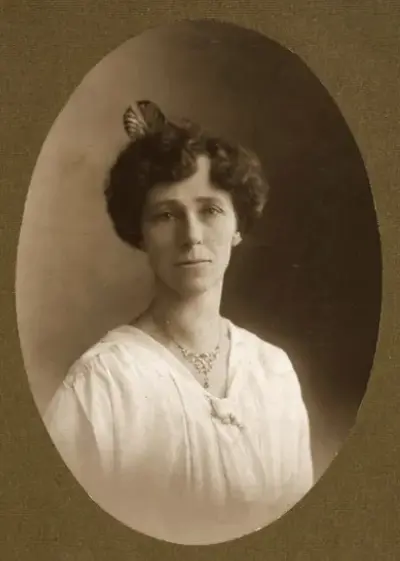
Marie Elizabeth Josephine Pitt (1869–1948) was an Australian poet and socialist activist, also journalist and Unitarian. Pitt wrote very highly coloured nature poetry, once much anthologised; and also wrote poetry in support of the socialist and labour movements. Marie Pitt was the companion of fellow poet and socialist Bernard O'Dowd.
