William Eaton Quotes
I can therefore say, as a Spartan Ambassador to the King of Persia’s Lieutenant, when asked whether he came with a public commission or on his own account: “If successful, for the public; if unsuccessful, for myself.”
William Eaton, 1764-1811, Diplomat, Army Officer, Statement before leaving America to bring an end to the war with Tripoli, Quoted in Edwards, Barbary General
Sourced by: Eigen's Political and Historical Quotations


Many people have erroneously credited the water’s edge analogy to senator Arthur Vandenberg who made the same point very effectively in 1950. See {36673}.

It is my responsibility to the Haitian people not to expose myself to danger except for good reason.
At the time Aristide was between terms as President. He had been elected and forced from office by a right wing coup. Then, with the assistance of the United States he returned but gave up the Presidency. He was overwhelmingly popular and was eligible to run again, and greatly influenced the government from behind the scenes. However, there had been a number of political murders ascribed to the right wing and the military. Aristide had cut back his public appearances greatly.


The English considered the new American diplomats very difficult to deal with and felt that gentlemanly English diplomats were ill suited to the task. He recommended:


It was only since Theodore Roosevelt’s presidency that the public received very much information about what the nation’s foreign policy was or was even desired except in time of war.


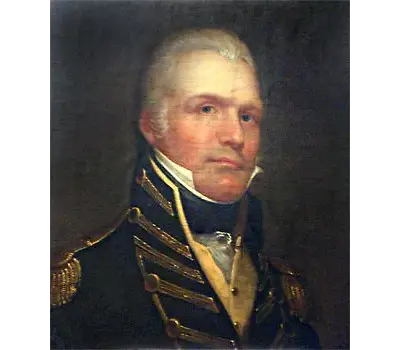
William Eaton was a United States Army officer and the diplomatic officer Consul General to Tunis (1797–1803). He played an important diplomatic and military role in the First Barbary War between the United States and Tripoli (1801–1805). He led the first foreign United States military victory at the Battle of Derne by capturing the Tripoli subject city of Derne in support of the restoration of the pasha (local monarch), Hamet Caramelli. William Eaton also gave testimony at the treason trial of former Vice President Aaron Burr. He served one term in the General Court of Massachusetts (state legislature). Eaton died on June 1, 1811 at the age of forty-seven.
