Daniel Patrick Moynihan Quotes
I can live with the robber barons, but how do you live with these pathological radicals?
Weisman, Steven R., editor. Daniel Patrick Moynihan: A Portrait in Letters of an American Visionary. PublicAffairs, 2010.

Much if the American industrial revolution was assisted by government subsidies of one kind or another. Railroads, telegraph, armaments, foundries are just a few.


This is one of the most indelicate political statements ever made. Normally, the argument that communists should be murdered is incendiary enough, but this remark came shortly after the Arizona attempted assassination of Congresswoman Gabrielle Giffords where she was shot in the head.


This futuristic work attempted to project American life in the year 2000—then 112 years in the future. It is remarkable how many elements he successfully predicted. In this quotation a character in 2000 looks “backward” and correctly describes what occurred well after Bellamy’s death. This prediction describes the early 20th century quite well.


In modern America, there are two political views of this notion. The one held by a small majority of the population is Trenchard’s quotation taken literally. Their view is that there if the is no way to maintain liberty if there is too wide a gap between the rich and the rest of the population. The second variant, held by many conservatives limits the equality to equality of opportunity. They are loathe to take any position that says that any gap between the rich and the remainder of the citizens might be too large. They would particularly disagree with the first sentence of another Trenchard quotation, {627024}.

After Roosevelt, most eras of American politics more or less followed the pattern Roosevelt described herein as a “calamity”, with the anger becoming more or less intense. Jefferson thought that these were natural divisions of politics in all societies--{604810}. The thing that masked this for years was race and slavery. In Lincoln’s time there were liberals and conservatives in both parties if race were ignored. In Theodore Roosevelt’s era, he, Taft and others were generally liberal reformers, while a large number of Republicans were conservative supporters of the status quo. Some democrats were radical reformers like William Jennings Bryan while others were arch conservatives. Until 1964 and the Civil Rights Act there were many conservatives in the Democratic Party, but almost all switched to the Republican Party in anger. The Republican conservatives tended to drive the Republican liberals out of the party and for the last part of the 20th century Roosevelt’s “calamity” well described the American political scene, and the anger increased carrying partisan bitterness into the 21st century.


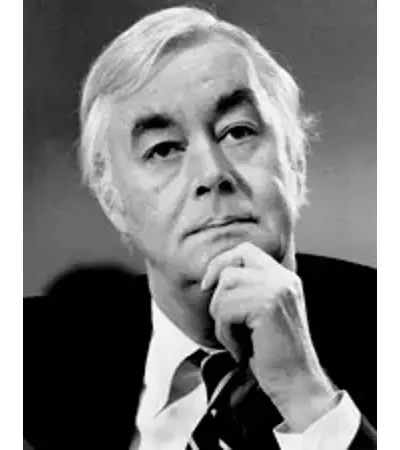
Daniel Patrick "Pat" Moynihan was an American politician, sociologist, and diplomat. A member of the Democratic Party, he represented New York in the United States Senate and served as an adviser to Republican U.S. President Richard Nixon.
