Yasser Arafat Quotes
I call on Russia and the United States of America, the cosponsors of the peace conference, to help the peace process take bigger steps by contributing to the process and helping to overcome all obstacles.
Arafat, Yasser. "Nobel Lecture." NobelPrize.org, Nobel Prize Outreach AB, 10 Dec. 1994.


She was instrumental in forming the United Nations, but one of its weaknesses was and has been since that it was very difficult and cumbersome for the UN to mount a military force to defend a country or region against aggression. The situation has not improved much on that score since 1948. Israel had just been created by the United Nations, but over a dozen Arab State armies attacked the fledgling Jewish nation. The Israelis, against all odds, not only defended their territory but were able to seize key Arab military and strategic areas. Mrs. Roosevelt, and most of the world, assumed that under the circumstances, the Arabs would negotiate a peace treaty with Israel to regain their land. However, the Arab nations would not recognize the State of Israel and would not even negotiate with the Israelis. ER and most of the world was wrong. Instead, the Arab nations’ strategy was to have a cease fire and build their military strength to attack later in greater force. When that also failed and Israel won the subsequent wars, the Arabs then turned to Terrorism. 60 years later, the Israelis and the Arabs were further apart in many ways than in 1948.


It is not our business to collect trophies but to try … [to] bring back the world to peaceful habits
Many in England and the other allies wanted to punish France for their aggression under Napoleon by barring France from the Concert of Europe—an informal institution of the major powers of Europe. Castlereagh’s view prevailed and France was included.


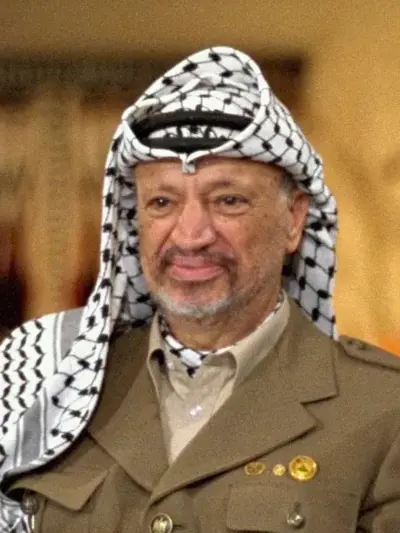
Mohammed Yasser Abdel Rahman Abdel Raouf Arafat al-Qudwa al-Husseini, popularly known as Yasser Arafat (Arabic: ياسر عرفات, romanized: Yāsir ʿArafāt) or by his kunya Abu Ammar (Arabic: أبو عمار, romanized: ʾAbū ʿAmmār), was a Palestinian political leader. He was Chairman of the Palestine Liberation Organization (PLO) from 1969 to 2004 and President of the Palestinian National Authority (PNA) from 1994 to 2004. Ideologically an Arab nationalist, he was a founding member of the Fatah political party, which he led from 1959 until 2004.
