Jean-Jacques Rousseau Quotes
I bold it impossible, that the great monarchies of Europe can subsist much longer; they all affect magnificence and splendor.
Rousseau, Jean-Jacques. Emile, or Education. Translated by Barbara Foxley, J.M. Dent & Sons, 1911, p. 158.


His appeal was also in the name of concurring heads of state of Finland, Holland, Denmark, Norway, Luxemburg, and Sweden.


Louis Napoleon had lead a military takeover or the French democratic republican government. The other great European powers, with the exception of England and Belgium at the time did not have parliaments or they were powerless and the countries were all monarchies with most of the monarchies and the aristocracy hateful of anything involving sharing their power with legislatures. This is despite the incredible success of England with its Constitutional Monarchy and Queen who was very pleased with it.


The Romanovs were the family of the Russian Czars while the Hapsburgs were the family names of the Emperors of Austria. The Austrian Army Chief of Staff hated the Russians and was constantly urging war against Czarist Russia. The archduke, the heir to the Austrian throne, was constantly arguing against attacking Russia. When Franz Ferdinand was assassinated, it triggered WWI. He was no longer able to have a voice against war, and Austria and Russia were soon at war. At the end of WWI, the Austrian Empire—an ally of Germany was broken up and the Russian Revolution ended the Romanov dynasty. The Archduke was absolutely right.


Syria was in the midst of a civil war against the Assad Tyrannical government. American policy was to support non-terrorist revolutionary groups against Assad. But in Iraq, Libya, Egypt and other countries where there was a terrible dictator who was removed, there was chaos and the countries in many ways were worse off.


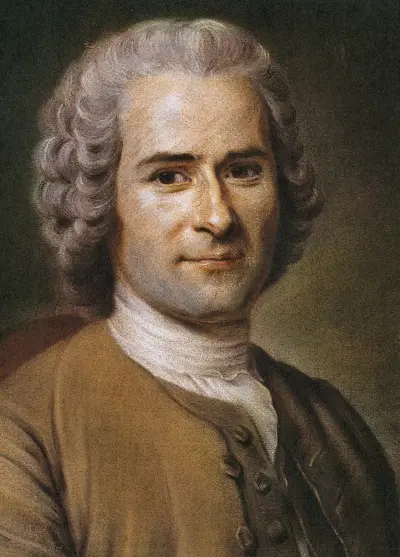
Jean-Jacques Rousseau was a Genevan philosopher, writer, and composer. His political philosophy influenced the progress of the Enlightenment throughout Europe, as well as aspects of the French Revolution and the development of modern political, economic and educational thought.
