Noam Chomsky Quotes
I am not sure just what Marx had in mind when he wrote that "philosophers have hitherto only interpreted the world in various ways; the point is to change it." Did he mean that philosophy could change the world, or that philosophers should turn to the higher priority of changing the world? If the former, then he presumably meant philosophy in a broad sense of the term, including analysis of the social order and ideas about why it should be changed, and how. In that broad sense, philosophy can play a role, indeed an essential role, in changing the world.
Chomsky, Noam. Language and Politics. Edited by C.P. Otero, Black Rose Books, 1988.


Lev Davidovich Bronstein. Although Plekhanov was the intellectual giant of Russian communism, he died only two years into the revolution. He was never happy with some of the pragmatic compromises the younger firebrand communist leaders were making from their ideals. By the time he passed away, most, especially the younger, communist leaders like Stalin saw him as an old obstructionist and he was never celebrated as a hero by the communists. It was Trotsky and older leaders like Lenin who appreciated him. See {590463}.

Vladimir Lenin. Although Plekhanov was the intellectual giant of Russian communism, he died only two years into the revolution. He was never happy with some of the pragmatic compromises the younger firebrand communist leaders were making from their ideals. By the time he passed away, most, especially the younger, communist leaders like Stalin saw him as an old obstructionist and he was never celebrated as a hero by the communists. It was Lenin and older leaders like Trotsky who appreciated him. See {590462}.


The occasion for the speech was the 60th birthday of Russian Premier, Joseph Stalin.

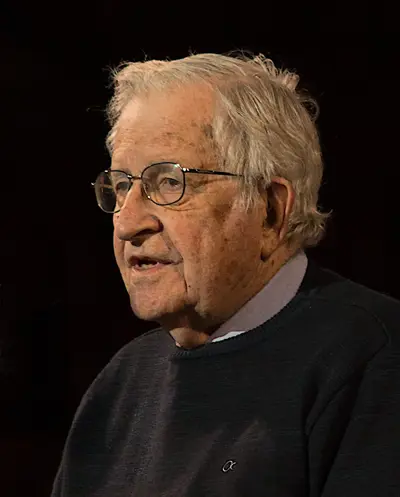
Avram Noam Chomsky is an American linguist, philosopher, cognitive scientist, historian, social critic, and political activist. Sometimes called "the father of modern linguistics", Chomsky is also a major figure in analytic philosophy and one of the founders of the field of cognitive science. He is Laureate Professor of Linguistics at the University of Arizona and Institute Professor Emeritus at the Massachusetts Institute of Technology (MIT), and is the author of more than 150 books on topics such as linguistics, war, politics, and mass media. Ideologically, he aligns with anarcho-syndicalism and libertarian socialism.
