John Keats Quotes
I am in that temper that if I were under water I would scarcely kick to come to the top.
Keats, John. The Letters of John Keats to His Family and Friends, edited by Sidney Colvin, Macmillan and Co., 1891, p. 11.


The nation was bitterly split over the issue of slavery and fighting a brutal civil war. The stress on the Government leaders was immense.

The Netherlands and Belgium then belonged to Spain. However, Protestantism was spreading to the Netherlands. The Duke of Alva was a Catholic fanatic and advised the King to send him and an army into the Lowlands to root out and kill the heretics. In contrast, the Duke of Feria counseled allowing the lowlands tolerance and warned that if the Inquisition and Alva’s army were introduced and would be feared as Alva wanted, the might get desperate and do unexpected things like revolt. The King, a Catholic fanatic himself, sent Alva and the Inquisition. In the next 12 years, fear spread throughout the lowlands. Finally, the people became so desperate that they did revolt and the lowlands gained their independence and Spain lost their most important and European possessions.
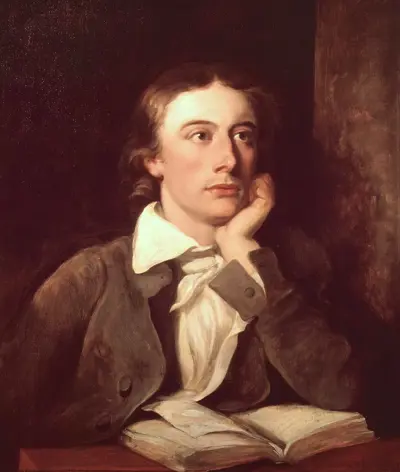
John Keats was an English Romantic poet. He was prominent in the second generation of Romantic poets, with Lord Byron and Percy Bysshe Shelley, though his poems were in publication for only four years before he died of tuberculosis at the age of 25. They were not generally well received by critics in his lifetime, but his fame grew after his death, and by the end of the century he had become one of the best beloved English poets, with a strong influence on many writers. Jorge Luis Borges called his first encounter with Keats' work an experience that he felt all of his life. It had a style "heavily loaded with sensualities", notably in the series of odes. It was typical of the Romantics to accentuate extreme emotion through emphasis on natural imagery. Today his poems and letters remain among the most popular and analysed in English literature. Especially acclaimed are "Ode to a Nightingale", "Sleep and Poetry" and the famous sonnet "On First Looking into Chapman's Homer".
