Frances Burney Quotes
I am ashamed of confessing that I have nothing to confess.
Burney, Frances. Evelina, or, The History of a Young Lady's Entrance into the World. Thomas Lowndes, 1778.


The Senator had been illegally frequenting prostitutes and was a regular customer of an infamous DC Madam. The reason this quotation is noteworthy is that it is a stunning example of moral hypocrisy in politics. Vitter ran as a very conservative politician who placed traditional Christian and family values at the forefront of his political philosophy. When his behavior was made public there were calls for his resignation. He refused and instead gave this statement. However, he had been elected to replace Robert Livingston who had been the Speaker of the House but had resigned when he was caught frequenting prostitutes. Vitter’s hypocrisy was all the more hypocritical as he had demanded the resignation of President William Clinton who had engaged in adulterous sex while in office. When he was running for office and his opponent complained that Vitter had been frequenting prostitutes, Vitter said that the accusation was absolutely and completely untrue" and that it was "just crass Louisiana politics”. This reinforced the hypocrisy in that Vitter claimed that one of Clinton’s failings was that he lied about his adulterous affair, while Vitter not only lied, but did so the public for purposes of getting elected. And just a few months before this statement, Vitter proclaimed the importance of abstinence for teenagers and faithfulness for adults. See {625896}.


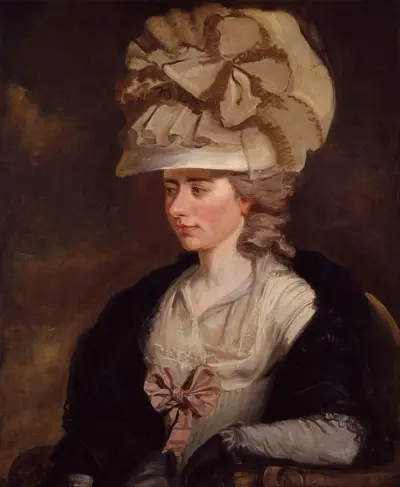
Frances Burney, also known as Fanny Burney and later as Madame d'Arblay, was an English satirical novelist, diarist and playwright. Born in Lynn Regis, now King's Lynn, England, on 13 June 1752, to the musician Dr Charles Burney (1726–1814) and his first wife, Esther Sleepe Burney (1725–1762), she was the third of her mother's six children. She began her "scribblings" at the age of ten. In 1786–1790 she held an unusual courtier appointment as "Keeper of the Robes" to Charlotte of Mecklenburg-Strelitz, George III's queen. In 1793, aged 41, she married a French exile, General Alexandre D'Arblay. Their only son Alexander was born in 1794. After a long writing career, and travels in which she was stranded in France by warfare for over ten years, she settled in Bath, England, where she died on 6 January 1840. Of her four novels, the first, Evelina (1778), was the most successful, and remains the most highly regarded. Most of her plays remained unperformed in her lifetime. She also wrote a memoir of her father (1832) and many letters and journals, which have been gradually published since 1889.
