Mary Boykin Chesnut Quotes
I am always on the women's side.
Chesnut, Mary Boykin. Mary Chesnut's Civil War. Edited by C. Vann Woodward, Yale University Press, 1981, p. 168.


Although she was disapproving of women’s rights advocates, she was an outspoken observer of the plight of the Victorian women. See {585322}.

Many politicians in that day would campaign from large carts drawn by oxen – a predecessor to the bandwagon of sorts. She was 1 of the 4 women who entered Oberlin College in 1837 thus becoming the first co-educational institution of higher education in the United States.

Some men in the audience hissed as she took the podium.

Although Mao attempted to reform Chinese sexist culture and practice, his and other efforts are taking hold very slowly. Into the 21st century, the Chinese Communist party included women but not at the highest levels where the traditional practice of selecting leaders was to choose elderly males. Part of the prejudice agaist female leaders results from Chinese history where women have ruled or controlled China at several points, but none performed well. This is unlike the experiences of England, India, Israel, and other nations where women have been very successful and respected leaders. There is an American NGO in China, providing assistance to women, which has adopted the name “Half the Sky” and it is the title of a book by Nicholas Kristoff and a record album by Ruby Turner.


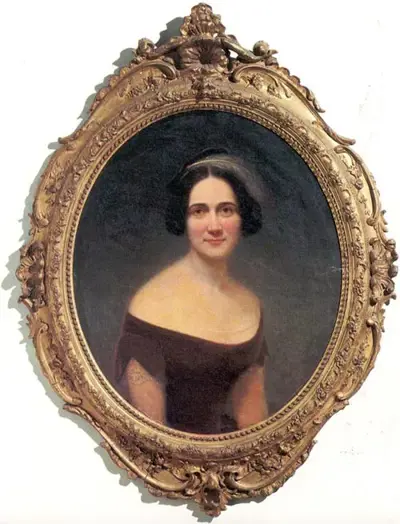
Mary Boykin Chesnut (née Miller) was an American author noted for a book published as her Civil War diary, a "vivid picture of a society in the throes of its life-and-death struggle." She described the war from within her upper-class circles of Southern planter society, but encompassed all classes in her book. She was married to a lawyer who served as a United States senator and Confederate officer. Chesnut worked toward a final form of her book in 1881–1884, based on her extensive diary written during the war years. It was published in 1905, 19 years after her death. New versions were published after her papers were discovered, in 1949 by the novelist Ben Ames Williams, and in 1981 by the historian C. Vann Woodward. His annotated edition of the diary, Mary Chesnut's Civil War (1981), won the Pulitzer Prize for History in 1982. Literary critics have praised Chesnut's diary—the influential writer Edmund Wilson termed it "a work of art" and a "masterpiece" of the genre—and the most important work by a Confederate author.
