Abby Johnson Quotes
I am a woman's advocate. I stand against abortion.
Johnson, Abby. Unplanned: The Dramatic True Story of a Former Planned Parenthood Leader's Eye-Opening Journey Across the Life Line. Tyndale House Publishers, 2010.


At the time the United States was the only developed country where the early abortion drugs were not available without a doctor's prescription. Ironically the drugs were even safer than the previous surgical abortion procedures where were already extremely safe. But the politics of the "culture wars" at the time obstructed scientific and medical decision making at the FDA.

Portugal, a traditional Roman Catholic nation where the Church has always had great influence, had laws banning abortion. However, in a national referendum the Portuguese people voted overwhelming to allow abortion despite the Church’s stand. The Parliament then overwhelmingly passed a law legalizing abortion on demand up to the 10 the week of pregnancy. The President, though opposed personally to abortion signed the bill. This quotation illustrates a common occurrence in industrial democracies whereby politicians will not impose their personal moral views on the laws of society but may well have contrary personal views.

This is a wonderful example of a good rhetorical technique. He focuses the attention on the unborn by observing that all his opponents on this point have already been born. Of course, he and all his supporters on the point—those who are against abortion—have already been born also. So what would the unborn say? Well that no one could know nor can any one know if the unborn have any thoughts must less thoughts on the subject of abortion.


Churches are political organizations too and are subject to the forces of their membership. In the case of the Southern Baptist Convention in 1971 they passed resolutions to assure the right of a woman to have an abortion to protect her health. The position on abortion changed steadily thereafter to even pass Constitutional amendments to ban abortions except to save the life of the mother. See {614356},54122, {614358}, {614359}, {614360}, {614361} for the dynamic history of the change.


Part of this maldistribution problem is a general health care distribution problem in rural areas. The larger part however, is the result of the religious and right to life pressures which tend to have more affect in rural areas than in cities and suburbs. One pressure is the fear that abortion providers have as a result of the many murders and assaults of the right to life forces.


Note, that like other feminist leaders of the time, she opposed abortion. However, between the economic pressures and the illegality of birth control devices and information provision, abortion was a critical decision that had to be faced by many women. Later, feminist leadership had to come to grips with the issue of who makes the decision in these areas, and placed the right of the woman to make these decisions, as opposed to husbands, fathers and government, as the highest priority. Then, when the drivers for abortion could not be eliminated, it was women who were criminalized. Feminists then fought for the right of abortion and the right of the woman to make decisions, but feminine leadership has never—in America—been advocates of abortion as opposed to the right of abortion, a subtlety that often is lost.
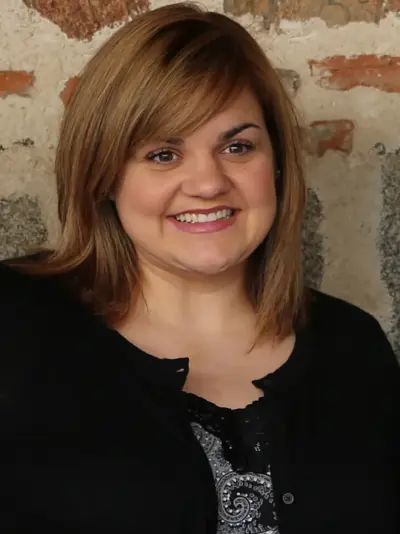
Abby Johnson is an American anti-abortion activist who previously worked at Planned Parenthood as a clinic director, but resigned in October 2009. She states that she resigned after watching an abortion on ultrasound. The veracity of her account and the details and motivation for her conversion have been challenged by investigative reporters, as medical records contradict some of her claims.
