Barbara Ehrenreich Quotes
I adore your catchy slogan, “Adoption, not Abortion,” although no one has been able to figure out, even with expert counseling, how to use adoption as a method of birth control, or at what time of the month it is most effective.
Barbara Ehrenreich, Economist and Columnist, The Worst Years of Our Lives, My Reply to George [Bush], 1989
Sourced by: Eigen's Political and Historical Quotations


At the time of the debate, the average pregnant woman’s risk of death was much higher from delivery than for an early abortion.

Not all abortion opponents object to birth control, but many do believing the two practices to be morally sinful. While the abortion conflict is given more publicity there are many in America who would return to the pre 1963 era when birth control was criminalized.


Opposing abortion even in the case of rape or incest:


In 1877 Annie Besant and Charles Bradlaugh attempted to publish The Fruits of Philosophy in Britain. It was a book on Birth Control. The two were immediately arrested and charged with publishing an ‘obscene’ book. Gifford was the Public Prosecutor. The authors were convicted and sentenced to 6 months in prison. However, they appealed and were exonerated in the appeal. The case was good for Gifford who went on to become Lord Chancellor of Britain. The trial was a strong motivator for Annie Besant to have a very activist career thereafter.
In America (and Europe) while the Roman Catholic Clergy oppose contraception but the majority of Catholics did not agree and used artificial contraception. There is a small proportion of the Evangelical churches who oppose contraception, but at this time over 90 percent of Evangelical clergy did not.


This is an important reason to preserve the right of women to have abortions that few people make out loud in public, but is a major factor in the vast majority of the decisions women make each year to have an abortion.


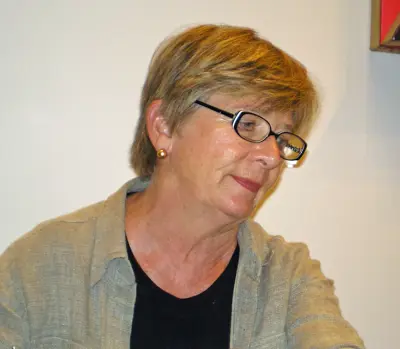
Barbara Ehrenreich is an American author and political activist who describes herself as "a myth buster by trade" and has been called "a veteran muckraker" by The New Yorker. During the 1980s and early 1990s she was a prominent figure in the Democratic Socialists of America. She is a widely read and award-winning columnist and essayist, and author of 21 books. Ehrenreich is perhaps best known for her 2001 book Nickel and Dimed: On (Not) Getting By in America. A memoir of Ehrenreich's three-month experiment surviving on minimum wage as a waitress, hotel maid, house cleaner, nursing-home aide, and Wal-Mart clerk, it was described by Newsweek magazine as "jarring" and "full of riveting grit," and by The New Yorker as an "exposé" putting "human flesh on the bones of such abstractions as 'living wage' and 'affordable housing'." She is a recipient of a Lannan Literary Award.
