Yukio Mishima Quotes
However, as words become particularized, and as men begin - in however small a way - to use them in personal, arbitrary ways, so their transformation into art begins. It was words of this kind that, descending on me like a swarm of winged insects, seized on my individuality and sought to shut me up within it. Nevertheless, despite the enemy's depredations upon my person, I turned their universality - at once a weapon and a weakness - back on them, and to some extent succeeded in using words to universalize to my own individuality.
Mishima, Yukio. Sun and Steel. Translated by John Bester, Kodansha International, 1970, p. 19.


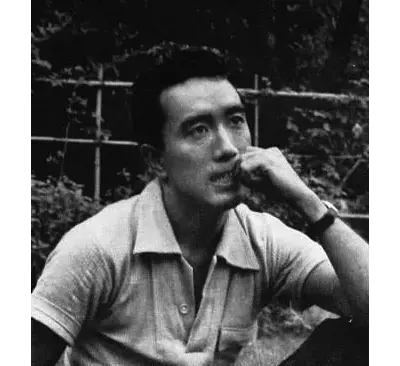
Yukio Mishima, born Kimitake Hiraoka (平岡 公威, Hiraoka Kimitake) was a Japanese author, poet, playwright, actor, model, Shintoist, nationalist, and founder of the Tatenokai (楯の会, "Shield Society"), an unarmed civilian militia. Mishima is considered one of the most important Japanese authors of the 20th century. He was considered for the Nobel Prize in Literature in 1968, but the award went to his countryman and benefactor Yasunari Kawabata. His works include the novels Confessions of a Mask (仮面の告白, Kamen no kokuhaku) and The Temple of the Golden Pavilion (金閣寺, Kinkaku-ji), and the autobiographical essay "Sun and Steel" (太陽と鉄, Taiyō to tetsu). Mishima's work is characterized by "its luxurious vocabulary and decadent metaphors, its fusion of traditional Japanese and modern Western literary styles, and its obsessive assertions of the unity of beauty, eroticism and death".
