Leonardo da Vinci Quotes
How many emperors and how many princes have lived and died and no record of them remains, and they only sought to gain dominions and riches in order that their fame might be ever-lasting.
da Vinci, Leonardo. The Notebooks of Leonardo da Vinci. Translated by Edward MacCurdy, Reynal & Hitchcock, 1938, p. 81.


John Adams was more concerned about the titles and forms of address of the President and Vice President than most of the Founding Fathers. Having spent time in London and Paris representing the nation, he was concerned about the dignity and symbolism of office. McCullough added this insight.

Jean the Good. It was not uncommon for wealthy nobles who were about to be defeated on the field of battle to offer bribes to the opposition soldiers to take them to their lines or headquarters. However, the leaders of the Army wanted to have charge of the important prisoners and the terms of their potential ransom. In this case the English knights started fighting amongst themselves as to who would take and ransom the French King, when two high ranking English nobles who had been dispatched by the Prince of Wales to look for the French King. They ordered the knights to desist their internal fighting, and the French King was delivered to the Prince of Wales.

After the King’s appointment in 1921 she “advised” him on establishing this regime and operating the government. At a time that women could not even vote in England, Bell was a kingmaker and major power in an area of the world that was much more sexist than England at the time.


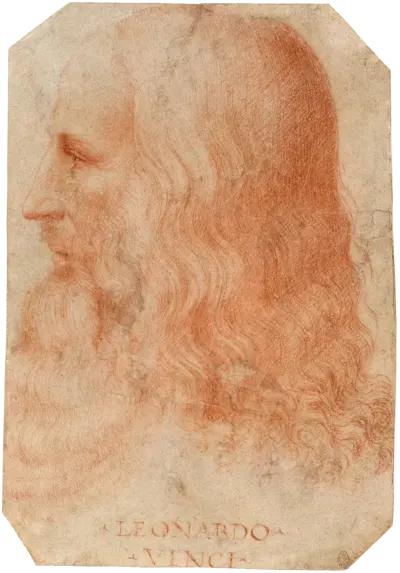
Leonardo da Vinci was an Italian polymath of the High Renaissance who was active as a painter, draughtsman, theorist, engineer, scientist, sculptor and architect. While his fame initially rested on his achievements as a painter, he also became known for his notebooks, in which he made drawings and notes on a variety of subjects, including anatomy, astronomy, botany, cartography, painting, and paleontology. Leonardo's genius epitomized the Renaissance humanist ideal, and his collective works compose a contribution to later generations of artists rivaled only by that of his younger contemporary and fellow founder of the High Renaissance, Michelangelo.
