Risa Lavizzo-Mourey Quotes
Higher costs naturally translate into fewer employers offering insurance coverage, and fewer employees accepting it, even when it is offered.
Lavizzo-Mourey, Risa. "The Cost of Lack of Health Insurance." Robert Wood Johnson Foundation, 2006.


Unlike most forms of insurance virtually everyone will have one or more claims and collect in his or her lifetime. Many of use will never have an automobile crash and collect on our insurance policy, but health is different in that we all change health status from well to ill at times and if we are fortunate we return to a state of wellness. But as Eigen observes, most of us who are tell are only temporarily well, With time our state will change to ill and if we are not very fortunate we will never use our health insurance as we will be dead. There is almost no way to age in a modern society without needing health care or funeral services, That is the consequence of the normal process of aging. So with health insurance schemes we, in effect, pass money from the living well to the living ill. So if health care costs increase fastr than inflation, which it has almost always done in the last half century, the temporarily well will be paying more and more. The only way to break that cycle is to somehow limit the cost increases of health care to that of the inflationary increase. Eigen has argued that most of us focus on the wrong problem--the details of the way the well pay for the ill, when the only soltuion is to reduce the rate of increases of health care costs. And there are only 2 ways to do that: Reduce the compensation for all the health care actors--physicians, nurses, other staff, hospitals, and manufacturers of medical equipment, supplies and expecially pharmaceuticals which have been increasing at the fastest rate of all or wer privide more and more effective prevention.


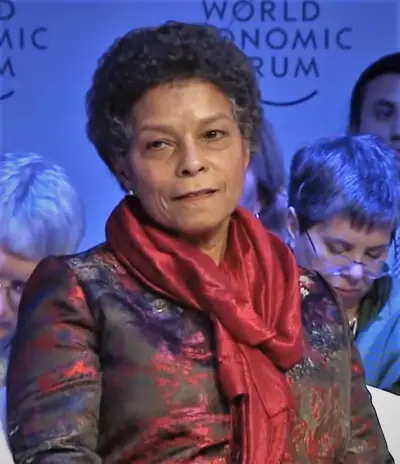
Risa J. Lavizzo-Mourey is an American medical doctor and executive who served as president and CEO of the Robert Wood Johnson Foundation from 2003 to 2017. She was the first woman and the first African-American to head the foundation, which has an endowment of about $8 billion and distributes more than $400 million a year. She has been named one of the 100 Most Powerful Women by Forbes several times, and one of The Grio's History Makers in the Making. She was elected a Member of the American Philosophical Society in 2016.
