Murray Bookchin Quotes
Here's what I do believe very strongly: that once capitalism comes into existence, once it creates this mythology of a stingy nature, then that myth has to be exorcised. In other words, we have to get out of people's heads the idea that without a market economy, without egotism, competition, rivalry and self-interest, without all the technological advances that [Karl] Marx imputed to capitalism, we have to eliminate the feeling that we would sink into some kind of barbarism.
Bookchin, Murray. "Interview with Murray Bookchin." Interview by Jeff Riggenbach. Reason, vol. 11, no. 6, Oct. 1979, p. 37.


Li was one of the leaders urging force to repress the demonstration. He was particularly offended by the Chinese students carrying the large “Statue of Liberty,” believing that this was an overt attempt to destabilize China. This was not known till the publication of the so-called “Tiananmen Square Papers” in 2001. The Chinese government claimed that these were forgeries.


[Most theoretical conservative economists believe this. When presented with the reality of market systems where great damage was done to people and areas, as in the Great Depression of 1929 and the Great Recession in 2008, they tend to argue that these were not really free markets—–that for various reasons, often they argue that government interference, corrupted the free market. Almost all economists would agree that if there were real highly competitive market his quote would be corrupt, but many have shown that the very greed that is produced by a free market tends to make the major players transform the market to reduce their risk and increase their power, thus producing monopoly, oligarchy, collusion, and anti-competitive practices. Greed is never harmless if it gets enough power.]


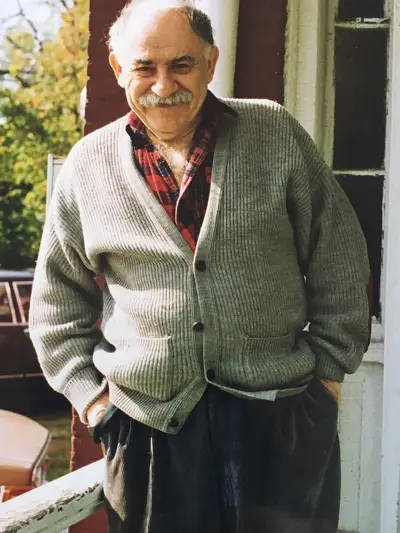
Murray Bookchin was an American anarchist, political philosopher, trade-union organizer, and educator. A pioneer in the environmental movement, Bookchin formulated and developed the theory of social ecology and urban planning, within anarchist, libertarian socialist, and ecological thought. He was the author of two dozen books covering topics in politics, philosophy, history, urban affairs, and social ecology. Among the most important were Our Synthetic Environment (1962), Post-Scarcity Anarchism (1971), The Ecology of Freedom (1982) and Urbanization Without Cities (1987). In the late 1990s, he became disenchanted with what he saw as an increasingly apolitical "lifestylism" of the contemporary anarchist movement, stopped referring to himself as an anarchist, and founded his own libertarian socialist ideology called communalism, which seeks to reconcile Marxist and anarchist thought.
