Pierre Corneille Quotes
Here honor binds me, and I wish to satisfy it.


There was a legal requirement that all cadidates for the parliament had to sign before the election an oath swearing to take their seat if elected to close off the possibility that some would cripple the parliament by winning but not taking their seats. De Valera wanted to run, and fully intended to take his seat, but had promised to sign no oaths about the parliament elections. On the last day possible, he went to the election clerk who gave him a piece of paper with the oath printed on the top and below it, the lines for candidate signatures. De Valera took a blank piece of paper and covered the oath but leaving the signature line exposed. He then signed the line and made sure that the clerk would remember that he has not signed an oath, but had signed a blank piece of paper where the oath could not be seen. To him this was a very important distinction but if failed to convince most other Irishmen.


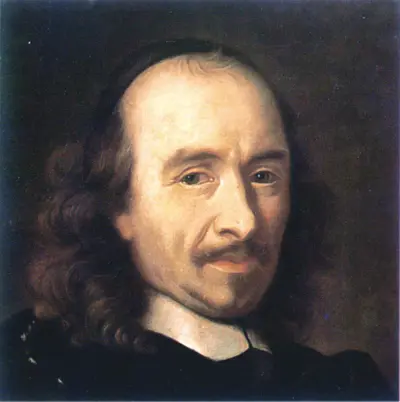
Corneille was born in Rouen, Normandy, France, to Marthe Le Pesant and Pierre Corneille, a distinguished lawyer. His younger brother, Thomas Corneille, also became a noted playwright. He was given a rigorous Jesuit education at the Collège de Bourbon (Lycée Pierre-Corneille since 1873) where acting on the stage was part of the training. At 18 he began to study law but his practical legal endeavours were largely unsuccessful. Corneille's father secured two magisterial posts for him with the Rouen department of Forests and Rivers. During his time with the department, he wrote his first play. It is unknown exactly when he wrote it, but the play, the comedy Mélite, surfaced when Corneille brought it to a group of traveling actors in 1629. The actors approved of the work and made it part of their repertoire. The play was a success in Paris and Corneille began writing plays on a regular basis. He moved to Paris in the same year and soon became one of the leading playwrights of the French stage. His early comedies, starting with Mélite, depart from the French farce tradition by reflecting the elevated language and manners of fashionable Parisian society. Corneille describes his variety of comedy as "une peinture de la conversation des honnêtes gens" ("a painting of the conversation of the gentry"). His first true tragedy is Médée, produced in 1635.
