Henry David Thoreau Quotes
He wrote in prison, not a History of the World, like Raleigh, but an American book which I think will live longer than that. I do not know of such words, uttered under such circumstances, and so copiously withal, in Roman or English or any history.
See John Brown {595833} and {595836} for samples.
Henry David Thoreau, 1817-1862, Writer, “The Last Days of John Brown,” 1860
Sourced by: Eigen's Political and Historical Quotations


After the assassination of Egyptian President Anwar Sadat hundreds of Egyptian religious fundamentalists were rounded up, jailed and tortured. al-Zawahiri broke under torture and revealed the names of some of his anti-government associates. Although he was not personally involved in the murder of Sadat, he served three additional years in jail. Motivated by has thirst for revenge at his torturers and his guilt at having been forced to betray his friend, he learned all he could about terrorism from the older Jihadists also in the same jail, and when he was released he elevated Islamic terrorism to another level by developing a strategy for the use of suicide bombers.

Generally former Presidents do not criticize sitting Presidents but the George W. Bush administration strained that custom. Carter, one of the most influential of America’s ex-Presidents abroad, had been continuously bombarded with foreign leaders criticizing and complaining about the Bush Administration policies and statements. While Bush had a core base of supporters in the United States, he was unpopular with the citizens of American allies, and hated by people from countries who were not. Fortunately the negative reaction was much more to Bush than America in general and the next President, Obama, benefitted from the contrast in terms of his international popularity.


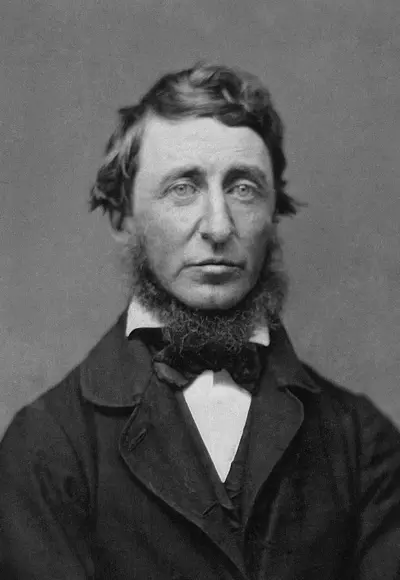
- Born: July 12, 1817
- Died: May 6, 1862
- Nationality: American
- Profession: Author
Henry David Thoreau was an American naturalist, essayist, poet, and philosopher. A leading transcendentalist, he is best known for his book Walden, a reflection upon simple living in natural surroundings, and his essay "Civil Disobedience" (originally published as "Resistance to Civil Government"), an argument for disobedience to an unjust state.
