Jose Marti Quotes
He who receives money in trust to administer for the benefit of its owner, and uses it either for his own interest or against the wishes of its rightful owner, is a thief.
Martí, José. Obras completas. Editorial de Ciencias Sociales, 1975.


The States sold bonds to finance the Revolutionary War. Some states had better prospects for redeeming their bonds than others. Georgia, South Carolina and North Carolina in particular had poorer prospects than most and their bonds were selling at about 25 cents on the dollar. Alexander Hamilton, then the Secretary of the Treasury, wanted the new Federal government to assume the state’s war debt and pay off the bonds. He made his proposal for how he would accomplish this on January 14, 1790. He delivered his report and proposal to Congress “Report on the Public Credit”. As soon as Hamilton’s proposal was read in Congress, sophisticated speculators set off for the Southern States to buy up as many bonds as they could before the owners found out that a Federal bail-out was under serious consideration. They could easily double, triple or even quadruple their money. To Jackson this was gross immorality. Other representatives had a different point of view. See {619928} & {619929}.


Arguing against the practice of the government utilizing Social Security trust funds for general purposes:


He was addressing the technique of the Special Prosecutor who had been appointed to investigate the relationship between the Donald Trump presidentical campaign and the Russian interference with the 2016 Presidential Campaign


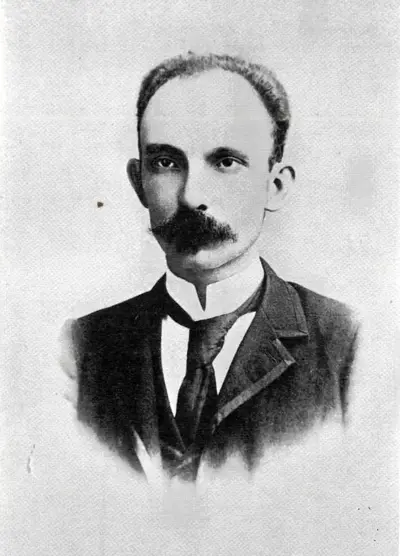
José Julián Martí Pérez was a Cuban poet, philosopher, essayist, journalist, translator, professor, and publisher, who is considered a Cuban national hero because of his role in the liberation of his country. He was also an important figure in Latin American literature. He was very politically active and is considered an important revolutionary philosopher and political theorist. Through his writings and political activity, he became a symbol of Cuba's bid for independence from the Spanish Empire in the 19th century, and is referred to as the "Apostle of Cuban Independence". From adolescence, he dedicated his life to the promotion of liberty, political independence for Cuba, and intellectual independence for all Spanish Americans; his death was used as a cry for Cuban independence from Spain by both the Cuban revolutionaries and those Cubans previously reluctant to start a revolt.
