Saadi Quotes
He who lives upon the fruit of his own labor, escapes the contempt of haughty benefactors.
Saadi. The Gulistan, or Rose Garden. Translated by Francis Gladwin, Kingsbury, Parbury, & Allen, 1822, p. 159.

Jefferson’s view of manufacturing however was small scale, craftsmen-oriented workshops, and not the large industrial efforts that were also so important in American growth and development. In early America, imports from England and Europe where the primary modes of obtaining the “comforts of life.”


The quotation is from Walzer, but the idea was originated by the Jewish Rabbi, Physician and Philosopher Maimonides (1135-1204) who Walzer credits. This idea is really at the historical and philosophical backbone of all welfare reform efforts. Maimonodes, for example, argued that one of the greatest forms of charity is giving a person money or other assistance to start a business.
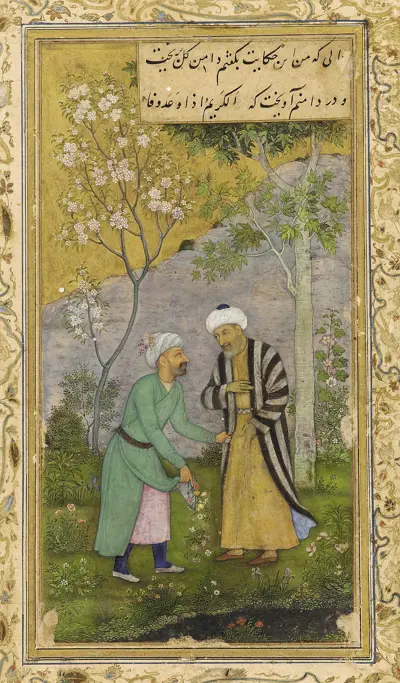
Abū-Muhammad Muslih al-Dīn bin Abdallāh Shīrāzī (Persian: ابومحمّد مصلحالدین بن عبدالله شیرازی), better known by his pen name Saadi (/ˈsɑːdi/; Persian: سعدی, romanized: Saʿdī, IPA: [sæʔˈdiː]), also known as Sadi of Shiraz (سعدی شیرازی, Saʿdī Shīrāzī; born 1210; died 1291 or 1292), was a major Persian poet and prose writer of the medieval period. He is recognized for the quality of his writings and for the depth of his social and moral thoughts. Saadi is widely recognized as one of the greatest poets of the classical literary tradition, earning him the nickname "The Master of Speech" or "The Wordsmith" (استاد سخن ostâd-e soxan) or simply "Master" (استاد ostâd) among Persian scholars. He has been quoted in the Western traditions as well. Bustan has been ranked as one of the 100 greatest books of all time by The Guardian.
