James Monroe Quotes
He wants a head fit for his station. Indolent except to improper, he is incapable of that combination and activity which the times require.
Madison did not fire Armstrong despite Monroe’s complaints.
James Monroe, 1758-1831, 5th President of the United States (Democratic Republican, VA), Letter as Secretary of State to then President James Madison urging the removal of Secretary of War John Armstrong, December 27, 1813
Sourced by: Eigen's Political and Historical Quotations


It was almost unheard of for generals and retired generals to criticize the administration publicly, but the George W. Bush Administration polarized not only the country as a whole but the military as well.

This is a very important quotation. In large part America's development to a great power was the result of American industry and enterprise. However, that characteristic among the Americans was rare in the South as de Tocqueville herein observes. This was one of the pernicious consequences of slavery. The Southern whites could live a very comfortable life without any ingenuity, innovation, hard work, passion or much effort of any kind. There was nothing that the South produced or created without slaves that anyone wanted or advanced the nation. Even after the Civil War and emancipation it took decades before the white Southerners began to adopt the enterprising behavior that the rest of America was known for and it would take until the 21st century for parts of the South the reach parity in this area with most of the rest of the nation.

One of the major factors in the Chinese economic development is the traditional hard work ethic of the Chinese people. Many other people work hard because they have to in order to survive, but many other cultures support a norm of hard work as a virtue per se. The Han Chinese work ethic is like the Protestant work ethic in that successful, even wealthy, people work very hard. Many successful Americans work far longer than 40 hours a week and the Han Chinese are very similar.
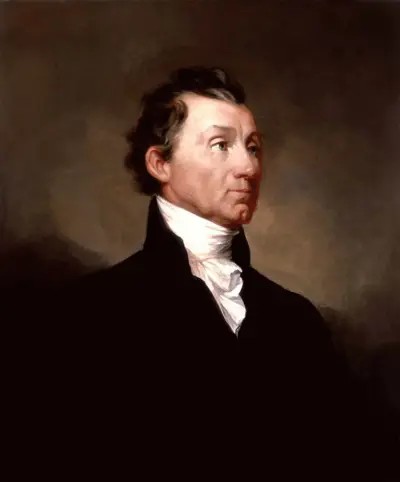
James Monroe was an American statesman, lawyer, diplomat and Founding Father who served as the fifth president of the United States from 1817 to 1825. A member of the Democratic-Republican Party, Monroe was the last president of the Virginia dynasty; his presidency coincided with the Era of Good Feelings. He is perhaps best known for issuing the Monroe Doctrine, a policy of opposing European colonialism in the Americas. He also served as the governor of Virginia, a member of the United States Senate, the U.S. ambassador to France and Britain, the seventh Secretary of State, and the eighth Secretary of War.
