Samuel Butler Quotes
He that imposes an oath makes it, Not he that for conveniences takes it. Then how can any man be said To break an oath he never made.
Samuel Butler, 1612-1680, British Poet, Hudibras
Sourced by: Eigen's Political and Historical Quotations


He had been captured by rebels and released on condition that he would not travel to Wei. Notwithstanding his oath, he continued his route.


It was Spinoza’s insistence that man should be free and use reason rather than faith and not to adhere to authority that got him excommunicated by the Jews, The Catholics and the Muslims, the only such man in history. Authority per se was evil if it was listened to.

Wayland, felt slavery was immoral and against the world of God. But he sought a middle-of-the-road position to keep his religion from schism and his University Trustees from conflict. The Baptist Churches of America were split asunder by the slavery issue. Wayland, who represented both the Northern abolitionist-leaning Baptist Churches and the Southern pro slavery churches, tried to forge a middle ground whereby slavery would end by the moral enlightenment of man and his love for fellow man as opposed to by legislation or economic pressure. He successfully predicted the outcome of the conflict except for one error he made. The conflict DID end slavery. The Baptist Church finally split into southern and northern wings in 1845. To this day, the Southern Church is extremely conservative, and fundamentalist; the Northern, very liberal and modern.


When a major country chooses a policy or practice, their decision is not for them only Sartre observed. Others will claim the same moral, ethical and political right. And the decision may be therefore made for many nations when the original decision was thought to apply to ourselves only and in the immediate context only.


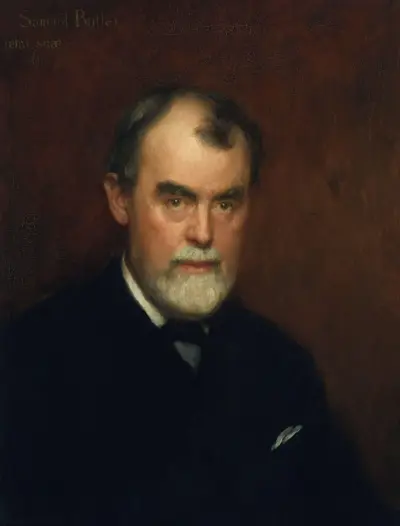
Samuel Butler was an English novelist and critic. He is best known for the satirical utopian novel Erewhon (1872) and the semi-autobiographical The Way of All Flesh, published posthumously in 1903. Both have remained in print ever since. In other studies he examined Christian orthodoxy, evolutionary thought, and Italian art, and made prose translations of the Iliad and Odyssey that are still consulted today.
