Fyodor Dostoevsky Quotes
He did not know that the new life would not be given him for nothing, that he would have to pay dearly for it, that it would cost him great striving, great suffering. But that is the beginning of a new story -- the story of the gradual renewal of a man, the story of his gradual regeneration, of his passing from one world into another, of his initiation into a new unknown life. That might be the subject of a new story, but our present story is ended.
Dostoevsky, Fyodor. Crime and Punishment. Translated by Richard Pevear and Larissa Volokhonsky, Vintage Books, 1993, p. 551.


Saloth Sar Pol Pot. He exterminated over 1 million of his own people who were obstacles to his idea that all people should live in villages. Victims included people who were city residents, intellectuals which meant anyone with an education, and even people who wore glasses were killed.


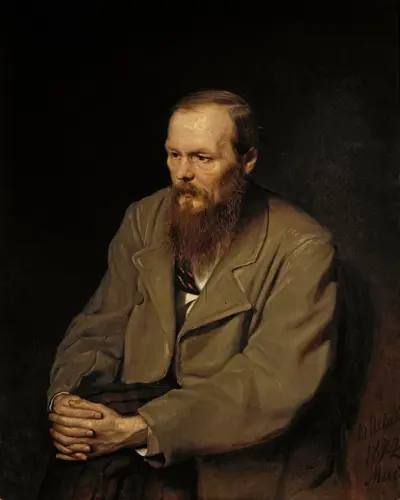
Fyodor Mikhailovich Dostoevsky, sometimes transliterated as Dostoyevsky, was a Russian novelist, philosopher, short story writer, essayist, and journalist. Dostoevsky's literary works explore human psychology in the troubled political, social, and spiritual atmospheres of 19th-century Russia, and engage with a variety of philosophical and religious themes. His most acclaimed works include Crime and Punishment (1866), The Idiot (1869), Demons (1872), and The Brothers Karamazov (1880). Dostoevsky's body of works consists of 12 novels, four novellas, 16 short stories, and numerous other works. Many literary critics rate him as one of the greatest psychological novelists in world literature. His 1864 novel Notes from Underground is considered to be one of the first works of existentialist literature.
