Ralph Waldo Emerson Quotes
Government has come to be a trade, and is managed solely on commercial principles. A man plunges into politics to make his fortune, and only cares that the world shall last his days.
Ralph Waldo Emerson, 1803-1882, Poet & Essayist, Letter to Thomas Carlyle, October 7, 1835
Sourced by: Eigen's Political and Historical Quotations


In the English political system the Executive Branch and the Legislative Branch are the same. In the House of Commons, the Front Benches are reserved for the Cabinet Ministers. The argument here is that when politicians become ministers, their career and party success often become more important than the welfare of the country.


This is an important quotation because it was believed by most of the Founding Fathers and the American public until relatively recently. Presidential candidates would not think of publicly campaigning. The view was that anyone who was ambitious for power and authority should not be trusted with it. The idea was first stated by Plato and has been a major view of Western politics since. Many still believe it, but no one has come up with a practical alternative in a large jurisdiction where there is no way to know about the possible candidates without their initiative. Earlier American presidential candidates, although they did not campaign as we know it, got associates to do their campaigning for them. At Presidential nominating conventions, candidates would not even attend. Abraham Lincoln for example never attended the convention at which he got nominated, but he had associates lining up delagates and he was managing their efforts behind the scenes.

There were many national politicians who would publicly castigate homosexuals and yet were themselves gay and in effect were living two lives. For them “coming out of the closet” had a temporary meaning restricted to time and place and then they would go back “in the closet” for their public personae.
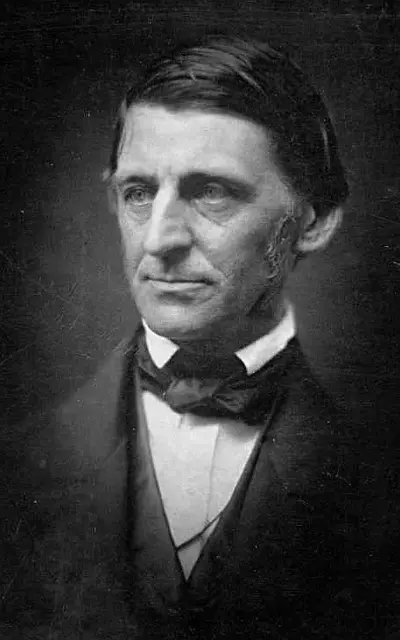
Ralph Waldo Emerson, who went by his middle name Waldo, was an American essayist, lecturer, philosopher, abolitionist and poet who led the transcendentalist movement of the mid-19th century. He was seen as a champion of individualism and a prescient critic of the countervailing pressures of society, and he disseminated his thoughts through dozens of published essays and more than 1,500 public lectures across the United States.
