Benjamin Franklin Quotes
God will certainly reward virtue and punish vice, either here or hereafter.
Franklin, Benjamin. The Autobiography of Benjamin Franklin. J. Parsons, 1793.


This oath was even in force after the American Constitution was ratified and in effect. At the time, the Bill of Rights was not believed to be binding on the States—only on the Federal Government. Throughout American history there were many practices that were unconstitutional but were simply never litigated in the courts. Local community pressure often inhibited individuals from asserting their rights in the Federal Courts as did the expense. So, for most of American history local communities forced stores to close on Sunday. When the issue was finally taken to the Supreme Court, it was clear that such a practice was in violation of the First Amendment. Even in 2011, in Atlanta, it is “illegal” to buy beer on Sunday. When someone decides to litigate that, it will likely also be declared unconstitutional. The law not only discriminates against non Christians, but there are a few Christian sects which believe that Saturday is the Sabbath.

As a slave holder himself, this was a dramatic statement. Slavery was immoral, God’s justice will not be on the white slave owners side, a slave revolt or other event could occur and change things radically. One great puzzlement of American history has been why Jefferson, who wrote so eloquently against slavery and predicted the disaster that would come. would himself keep his slaves and never free them as George Washington did. Some argue that he was so broke financially, that he could not afford to free them.


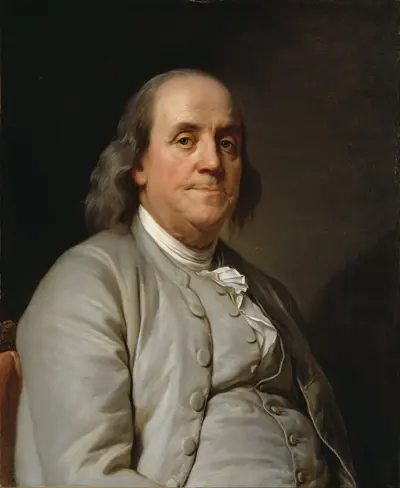
Benjamin Franklin FRS FRSA FRSE was one of the Founding Fathers of the United States. A polymath, he was a leading writer, printer, political philosopher, politician, Freemason, postmaster, scientist, inventor, humorist, civic activist, statesman, and diplomat. As a scientist, he was a major figure in the American Enlightenment and the history of physics for his discoveries and theories regarding electricity. As an inventor, he is known for the lightning rod, bifocals, and the Franklin stove, among other inventions. He founded many civic organizations, including the Library Company, Philadelphia's first fire department, and the University of Pennsylvania.
