Ayn Rand Quotes
God help us, ma'am! Do you see what we saw? We saw that we'd been given a law to live by, a moral law, they called it, which punished those who observed it - for observing it. The more you tried to live up to it, the more you suffered; the more you cheated it, the bigger reward you got. Your honesty was like a tool left at the mercy of the next man's dishonesty. The honest ones paid, the dishonest collected. The honest lost, the dishonest won. How long could men stay good under this sort of a law of goodness?
Rand, Ayn. Atlas Shrugged. Random House, 1957, p. 661.


What is interesting is at the time and today there are few politicians who would not agree completely, including all the members of Congress. Yet every word of the absurdly complex and unfair tax law was written and passed by some Congress and signed by some President. Congress could change it any time it wants to. The problem is that ut while all agree that the status quo is terrible, there is no agreement on what the correct solution would be, and any proposed change would be assaulted by the lobbyists of the special interests who benefit from the status quo. In that sense it is just like Health Care Reform. When a change is finally crafted and achieves a majority of Congress, each change has been trashed by so many vested interest that the public is not sure the reform will be better then the terrible system that existed before.

Mistakes in the criminal justice system have been with us from the birth of the nation.


The Mishnah was the first written codification of ancient Jewish laws and interpretations. The Books of Moses--the first 5 Books of the Old Testament was the fundamental law--God's law. The Mishnah was a combintion of administative and policy manuals and judicial precedents.


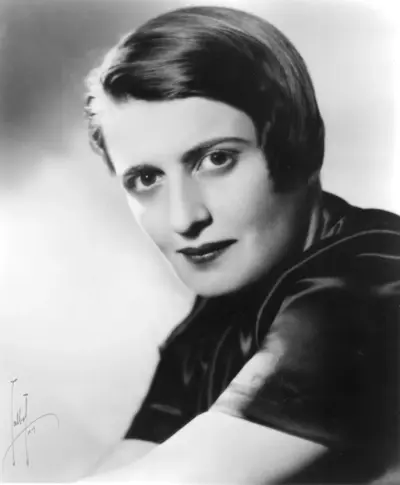
Ayn Rand was a Russian-American writer and philosopher. She is known for her two best-selling novels, The Fountainhead and Atlas Shrugged, and for developing a philosophical system she named Objectivism. Born and educated in Russia, she moved to the United States in 1926. She had a play produced on Broadway in 1935 and 1936. After two early novels that were initially unsuccessful, she achieved fame with her 1943 novel, The Fountainhead. In 1957, Rand published her best-known work, the novel Atlas Shrugged. Afterward, she turned to non-fiction to promote her philosophy, publishing her own periodicals and releasing several collections of essays until her death in 1982.
