Horace Quotes
Gloriously false. [Like Rahab.]
Horace. Odes and Epodes. Translated by Niall Rudd, Harvard University Press, 2004, p. 181.


After the Constitution had been ratified, there was a concerted attempt on the part of the Southern Slave States to minimize the importance of the Declaration of Independence. They feared that the equality principle in the Declaration should be seen by Americans as desirable policy which clearly meant slavery was untenable. There were three approaches all used by the Southerners. First, they tried to make it clear that the Declaration had no weight in American law or moral principles as it was superseded by the Constitution. Second, they claimed that it could only have applied to white men as Black males were not really men. Third, that the statement was patently false. This quotation illustrates the latter.


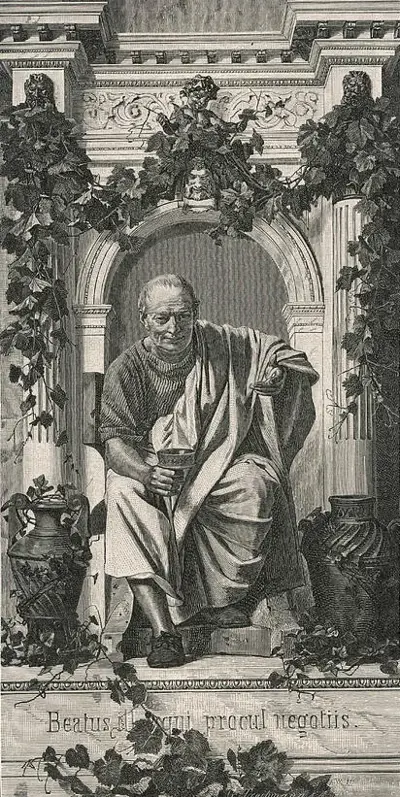
Quintus Horatius Flaccus, known in the English-speaking world as Horace (/ˈhɒrɪs/), was the leading Roman lyric poet during the time of Augustus (also known as Octavian). The rhetorician Quintilian regarded his Odes as just about the only Latin lyrics worth reading: "He can be lofty sometimes, yet he is also full of charm and grace, versatile in his figures, and felicitously daring in his choice of words."
