Gregory I Quotes
Give not much to whom you should give little, nor little to whom much should receive much.
This was one of the principles of Saxon King Alfred in his distribution of 1/4 of his revenue. Typically. Kings would give lands, monies and tax exemptions to the wealthy nobles to ensure their support and loyalty even though they did not need the benefit, and those that needed, did not get. Opponents of George W. Bush and the early 21st century Republicans used this quotation to criticize the policies that would be large tax cuts and other benefits to the wealthy, while assuming that there would be a “trickle down” effect to the others.
Gregory I, 540–604, Gregory the Great, Roman Catholic Pope, Quoted in John Asser, The Life of King Alfred, ~888
Sourced by: Eigen's Political and Historical Quotations


Normally, this would not be a particularly noteworthy quotation. However, at the time the Republican Party had shifted far to the right–more so than at any other time since its inception. The primary election he was in brought out the most right wing members of the party, which was for gutting the social safety net, did not see health care as a right, and even wanted to terminate Obamacare and Social Security as it existed. Yet when asked in a nationwide TV interview, what the government should do for the poor and destitute who could not afford health care or other necessities. His courageous answer and position doomed his bid for the presidential nomination.


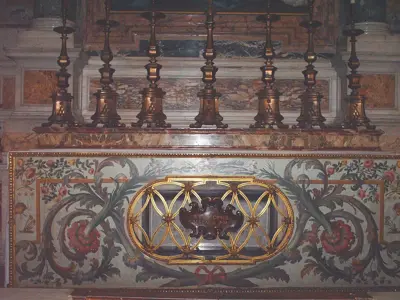
Pope Gregory I, commonly known as Saint Gregory the Great, was the bishop of Rome from 3 September 590 to his death. He is known for instigating the first recorded large-scale mission from Rome, the Gregorian Mission, to convert the then-pagan Anglo-Saxons in England to Christianity. Gregory is also well known for his writings, which were more prolific than those of any of his predecessors as pope. The epithet Saint Gregory the Dialogist has been attached to him in Eastern Christianity because of his Dialogues. English translations of Eastern texts sometimes list him as Gregory "Dialogos", or the Anglo-Latinate equivalent "Dialogus".
