Gunnar Myrdal Quotes
Generally speaking, the less privileged groups in democratic society, as they become aware of their interests and their political power, will be found to press for ever more state intervention in practically all fields.
Myrdal, Gunnar. Beyond the Welfare State: Economic Planning and Its International Implications. Yale University Press, 1960.

This quotation not only illustrates the typical Southern attitude at the time as the issue of Slavery began to be the subject of Federal governmental debate, but it also illustrates the incredible party flip flops over time. Ritchie was one of the leading Democratic Politicians of his day, and it was the Democrats who were opposed to Government. However, people without a knowledge of early American History might think that this quotation came from right wing Republicans of the early 21st century. By then, it was the Democrats who saw the important role of government. The Democrats were then extreme enemies of the Federal Government and were against freedom for Blacks and their rights, that the Republican Party was created and used government more than most Americans ever thought possible, ended slavery and permitted Negro voting and equality. Almost 200 years later it was the Democrats who were espousing the old Republican Views, and the Republicans holding the old Democratic view of government and adopting a more passive view on racial equality and justice.


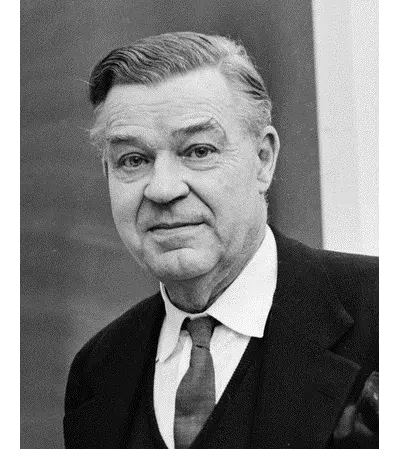
Karl Gunnar Myrdal was a Swedish economist and sociologist. In 1974, he received the Nobel Memorial Prize in Economic Sciences with Friedrich Hayek for "their pioneering work in the theory of money and economic fluctuations and for their penetrating analysis of the interdependence of economic, social and institutional phenomena." He is best known in the United States for his study of race relations, which culminated in his book An American Dilemma: The Negro Problem and Modern Democracy. The study was influential in the 1954 landmark U.S. Supreme Court Decision Brown v. Board of Education. In Sweden, his work and political influence were important to the establishment of the Folkhemmet and the welfare state.
