Lyndon B. Johnson Quotes
Frontlash
The “frontlash” was a phenomenon where 30 percent of the Republican Voters were concerned enough about Republican Candidate Barry Goldwater’s statements and intended policies that they supported Johnson. The backlash occurred before Goldwater could even implement his policies—hence the term “frontlash”.
Lyndon Baines Johnson, 1908-1973, 36th President of the United States (Democrat, TX), Term he coined, 1964
Sourced by: Eigen's Political and Historical Quotations


Referring to the candidate’s staff.


Mrs. Roosevelt, on her own, would criticize the ethics of certain campaign techniques and would criticize them. However she doesn’t say publicly which party she was chastising—her Democrats or the Republicans. And she starts by honestly stating that both parties do this and she tells the readers that it is the campaign headquarters who go to these extremes. Her technique was very effective in that the political operatives who released the sleazy material knew who they were, and realized that if they kept doing it, people would find out that they were the villains. Very often they just stopped, and that was what Mrs. Roosevelt wanted. She wrote this two months before the Presidential elections without every checking with the campaign staff and leaders who read it in the newspapers every day like everyone else. Needless to say that they were not happy, but the President was fine with it and she has had more independence of action and writing than any First Lady in history. She even disagreed with the President slightly sometimes, but usually she was very supportive of FDR and the New Deal. It is hard for us years after to realize that she had a newspaper column published every day in papers throughout the country, she had a regular radio show. Her views reached more Americans every day than the President’s and the campaign staff’s. Her husband was elected to 4 terms—more than any other American President, and yet until Hillary Clinton, no first lady every had gotten overtly involved with public campaigning and political communications, and Mrs. Clinton was nowhere near as active or independent as Mrs. Roosevelt.


More so than any other presidential candidate in history, Trump repeatedly told outright lies and exaggerated most of what had a grain of truth. However, he tended not to see this as lying, and not to be embarrassed when caught by fact checkers, journalists or other candidates. His response was almost always to point out how much public support he had, how many people attended the speech where he made the statement, how well he was doing in the polls. He had a hard core group of supports who did not seem to be concerned with this behavior, and it was difficult for opponents or even journalists to argue that those supports were ignorant, foolish or in error as explained in this quotation.

Geert Wilders, a far-right politician who was then seen as a likely contender to become prime minister was convicted by a 3 Judge Court of inciting discrimination and of insulting a group for saying that the Netherlands would be safer with fewer Moroccans. Wilders was one of the leading European Islamaphobes.


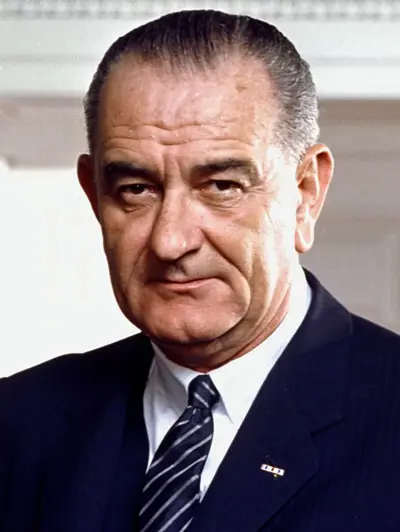
Lyndon Baines Johnson, often referred to by his initials LBJ, was the 36th president of the United States, in office from 1963 to 1969. He served as the 37th vice president from 1961 to 1963 and assumed the presidency following the assassination of President John F. Kennedy. A Democrat from Texas, Johnson was also a United States representative and later majority leader in the United States Senate. Johnson is one of only four people to have served, at various times, in all four federal elected positions.
