Charles Dickens Quotes
From these cities they would go on again, by the roads of vines and olives, through squalid villages, where there was not a hovel without a gap in its filthy walls, not a window with a whole inch of glass or paper; where there seemed to be nothing to support life, nothing to eat, nothing to make, nothing to grow, nothing to hope, nothing to do but die.
Charles Dickens, Description of poverty in England of the Industrial Revolution, Little Dorrit
Sourced by: Eigen's Political and Historical Quotations


Reflection on the Irish Potato Famine of 1845-1850
In 1921, there was a terrible famine in Communist Russia. The United States was ambivalent about humanitarian relief to the leading Bolshevik county while there were Communist supporters in the U. S. who were setting off bombs and calling for the overthrow of the democratic government. Herbert Hoover persuaded President Warren G. Harding that food aid relief was a moral obligation and would do much to weaken Bolshevism. 400 ARA Americans went to Russia and hired over 120,000 Russians to implement the relief program. Rarely in human history have this few people with the resources made available to them saved as many lives as Hoover and his staff did. A number of the Americans died in Russia from disease and those who survived worked under near impossible conditions. Ironically, while it created much good will towards the United States, many including Hoover suspected that the program and the pressure that the Americans put on the Soviet Government officials for more efficient administration may have forced the Soviet Government to learn how to organize much of othe society like the railroads, thus strengthening the Communist Party’s control over the country.


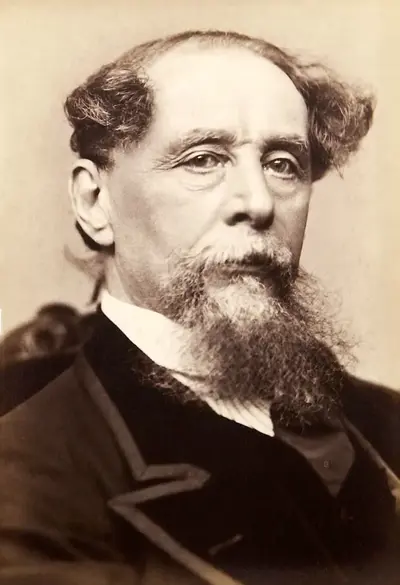
Charles John Huffam Dickens FRSA was an English writer and social critic. He created some of the world's best-known fictional characters and is regarded by many as the greatest novelist of the Victorian era. His works enjoyed unprecedented popularity during his lifetime and, by the 20th century, critics and scholars had recognised him as a literary genius. His novels and short stories are widely read today.
