Friedrich Nietzsche Quotes
From the State the exceptional individual cannot expect much. He is seldom benefited by being taken into its service; the only certain advantage it can give him is complete independence. Only real culture will prevent him being too early tired out or used up, and will spare him the exhausting struggle against culture-philistinism.
Nietzsche, Friedrich. Human, All Too Human. Translated by R. J. Hollingdale, Cambridge University Press, 1996.


Note the belief that the author has the belief that over time homogeneity is important in a state, whereas the most successful modern states have been ones that are diverse—i.e. America, Britain, China, France. There have been some small successful states like Norway that are homogeneous, but large states need the heterogeneity.


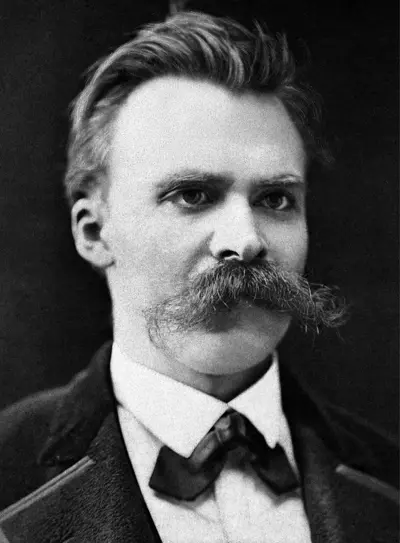
Friedrich Wilhelm Nietzsche was a German philosopher, cultural critic, composer, poet, writer, and philologist whose work has exerted a profound influence on modern intellectual history. He began his career as a classical philologist before turning to philosophy. He became the youngest person ever to hold the Chair of Classical Philology at the University of Basel in 1869 at the age of 24. Nietzsche resigned in 1879 due to health problems that plagued him most of his life; he completed much of his core writing in the following decade. In 1889, at age 44, he suffered a collapse and afterward a complete loss of his mental faculties. He lived his remaining years in the care of his mother until her death in 1897 and then with his sister Elisabeth Förster-Nietzsche. Nietzsche died in 1900.
